African Ginger
Siphonochilus aethiopicus
Production
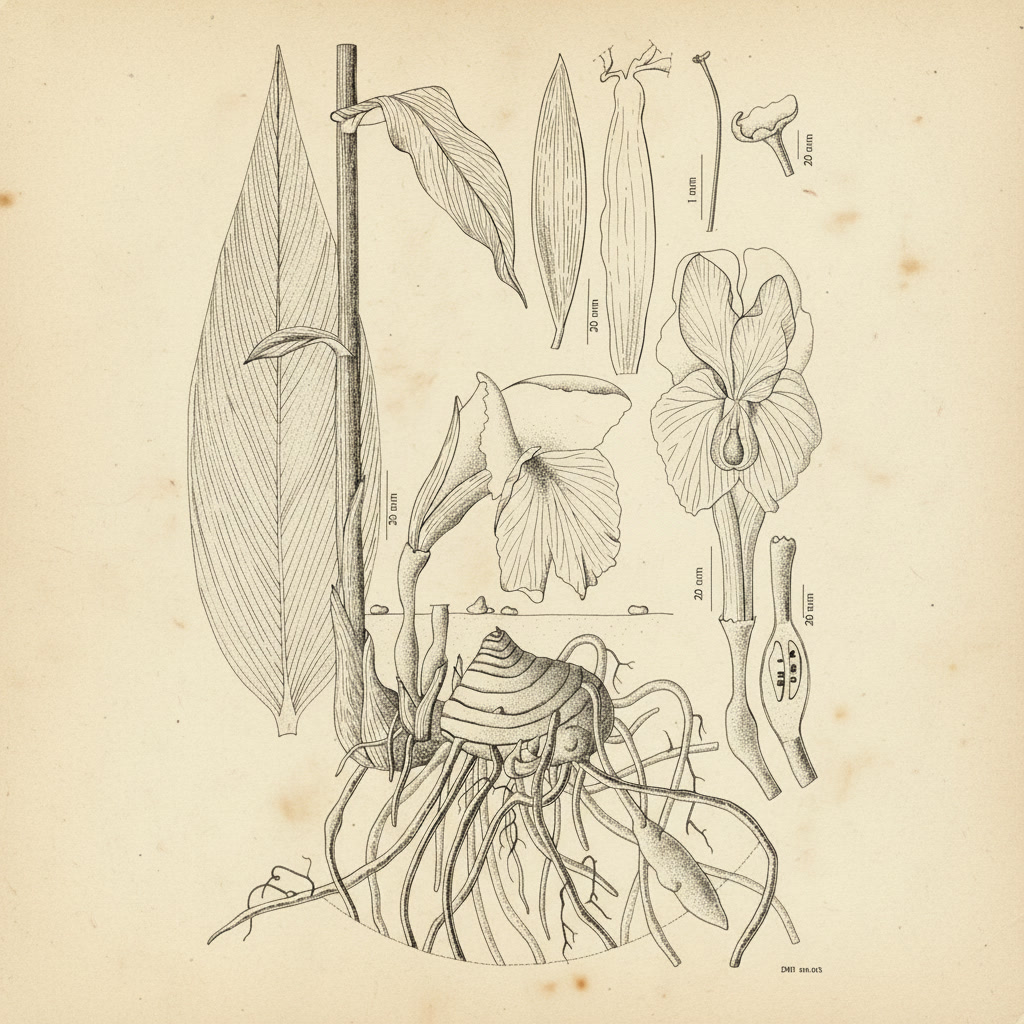
Siphonochilus aethiopicus, known as African or Wild Ginger, is one of the most significant and endangered medicinal plants in southern Africa. Unlike its Asian counterpart, this plant grows from a pungent aromatic rhizome buried deep in the soil of coastal and bushveld forests. It has been central to Zulu and Swazi traditional medicine for centuries and remains one of the highest-volume plants traded in muthi markets across KwaZulu-Natal and Gauteng. The plant produces beautiful pink to purple flowers at ground level, appearing before the leaves in spring. Demand for the rhizome has been so intense that wild populations have collapsed in many areas, and the species is now listed as protected under South African law. Conservation efforts led by SANBI and several university programmes are focused on cultivation protocols to reduce pressure on wild stocks. African Ginger represents both a critical medicinal resource and an urgent conservation challenge for South Africa.
- Siphonochilone (sesquiterpene ketone — primary bioactive)
- Caryophyllene
- Terpinen-4-ol
- Flavonoids
- Rhizome decoction used to treat colds, flu, and respiratory infections
- Used as an antispasmodic for asthma and chest tightness
- Applied topically for muscle pain and inflammation
- Used in women's reproductive health — menstrual regulation and fertility support
- Widely used in Zulu and Swazi ceremonial and ritual contexts
- Siphonochilone demonstrated significant anti-inflammatory activity comparable to ibuprofen in vitro (Lall & Meyer, 1999)
- Antispasmodic activity on smooth muscle confirmed in pharmacological studies (University of Pretoria, 2001)
- Antifungal properties documented against Candida species (Motsei et al., 2003)
Subtropical to warm temperate. Requires well-drained forest soil, partial shade, and frost-free conditions. Rainfall 600–1200mm per annum.
KwaZulu-Natal coastal forests, Mpumalanga lowveld, Limpopo bushveld margins
Commercial cultivation is in early stages. SANBI and the University of KwaZulu-Natal have developed rhizome propagation protocols. A small number of certified growers supply the formal herbal industry. Wild harvesting is legally restricted.
African Ginger holds deep sacred significance among Zulu and Swazi communities. Izinyanga (herbalists) and izangoma (diviners) use the rhizome in both physical and spiritual healing. It is one of the plants considered ukuphilisa — life-giving — in Zulu cosmology. Preparations are made by scraping or grating the fresh rhizome into water or by slow decoction of dried root. The plant is associated with protection against airborne illness and evil spirits. Its trade in muthi markets dates back centuries and it remains one of the most sought-after plants in informal medicine markets in Durban, Johannesburg, and Mbabane. The collapse of wild populations is considered a cultural crisis as much as an ecological one by traditional health practitioners.