African Potato
Hypoxis hemerocallidea
Production
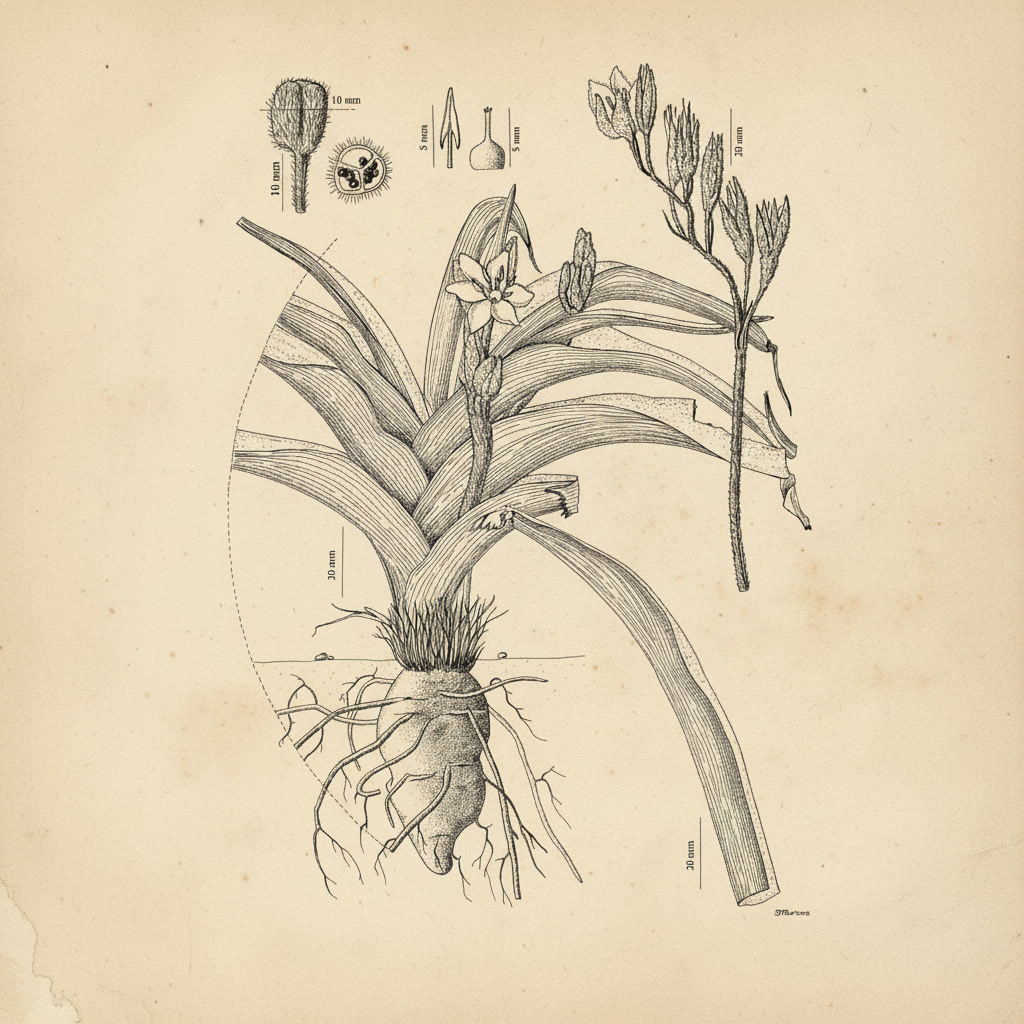
Hypoxis hemerocallidea, known as African Potato, Star Flower, or Inkomfe in Zulu, is one of the most recognisable and widely traded medicinal plants in South Africa. The plant grows from a large starchy corm buried in grassland soils and produces striking yellow star-shaped flowers above strap-like leaves. Its corm has been used in Zulu, Sotho, and Tswana traditional medicine for centuries, primarily as an immune tonic and treatment for urinary complaints. African Potato entered global consciousness in the early 2000s when it was controversially promoted by South African health authorities as a treatment for HIV/AIDS — a claim that was not supported by clinical evidence and which led to serious drug interactions when taken alongside antiretroviral medications. This episode significantly damaged its reputation but also drove a wave of rigorous scientific research that has since validated many of its traditional uses while clearly delineating its limitations. Today it is recognised as a legitimate immunomodulatory plant with genuine therapeutic potential when used appropriately and without contraindicated medications.
- Hypoxoside (primary bioactive — converted to rooperol in the body)
- Rooperol (norlignan — potent antioxidant and immunomodulator)
- Beta-sitosterol
- Stigmasterol
- Sitosterol glycosides
- Corm decoction used as a general immune tonic and strength restorative
- Taken for urinary tract infections and prostate complaints
- Used to treat cancer in traditional contexts
- Applied for nervous system complaints and epilepsy
- Used as an anti-inflammatory for arthritis and joint pain
- Rooperol demonstrated significant antioxidant and anti-inflammatory activity in vitro (Drewes et al., 2003)
- Beta-sitosterol shown to reduce symptoms of benign prostatic hyperplasia in clinical trials (Wilt et al., 1999)
- Immunomodulatory effects documented in multiple South African studies
- Serious interaction with antiretroviral drugs (particularly efavirenz and nevirapine) confirmed — reduces plasma drug levels significantly (Langlois-Klassen et al., 2007)
Highveld grassland and savanna. Tolerates moderate drought and frost. Requires well-drained sandy or loamy soils. Rainfall 500–900mm per annum.
KwaZulu-Natal midlands, Mpumalanga highveld, Limpopo bushveld margins, Gauteng grassland remnants
Predominantly wild-harvested. Overharvesting has significantly reduced wild populations in accessible areas. Cultivation protocols have been developed by the ARC and University of KwaZulu-Natal but commercial scale production remains limited. The corm takes 3–5 years to reach harvestable size.
Hypoxis hemerocallidea occupies a central place in Zulu medical tradition. Known as Inkomfe, the corm is prepared by traditional healers as a decoction or consumed raw as a strengthening food. Izinyanga use it as a primary immune tonic, prescribed during and after illness to restore vitality. In Sotho tradition it is known as Lotsane and used similarly for general fortification and urinary complaints. The plant's bright yellow flowers are considered auspicious in some communities and associated with healing energy. The controversy of the early 2000s, when government health officials promoted it as an HIV treatment, is regarded by traditional healers as a misappropriation of their knowledge — the plant was never traditionally used as a cure for AIDS but as one component of a broader wellness system. The episode has since led to more structured dialogue between the traditional medicine sector and formal health authorities in South Africa.