South African Botanical Registry

Aloe Ferox

Aloe ferox
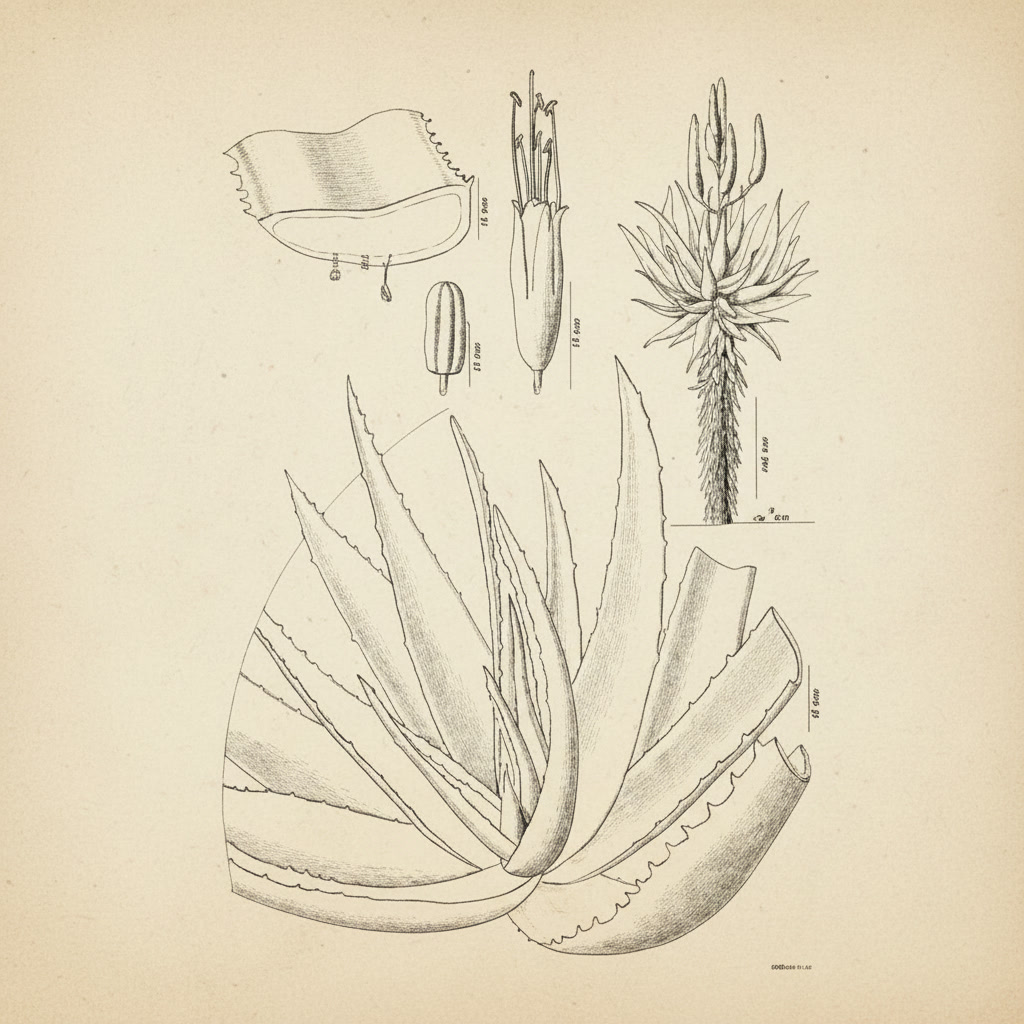
← back Explore
Photo Credit
John van der Berg · Cederberg Nature Reserve · March 2024
Common Names
Afrikaans
Bitteraalwyn · Bergaalwyn
English
Cape Aloe · Bitter Aloe
Khoikhoi
iikhala
Ndebele
inhlaba
San
not documented
Sepedi
kgopane
Sesotho
kgopane
Setswana
kgopana
Swati
inhlaba
Tsonga
nkhala
Venda
tshipembe
Xhosa
ikhala
Zulu
inhlaba
Common Name
Aloe Ferox
Scientific Name
Aloe ferox
Family
Asphodelaceae
Native Region
Eastern and Western Cape, KwaZulu-Natal, and Lesotho — thriving on rocky hillsides and mountain slopes from sea level to 2500m
Annual
Production
~4,000 t
Export Revenue
R280m
Export Markets
40+ countries
Livelihoods
3,000–5,000
Protection & Benefit Sharing
Cape Aloe Cape Aloe Export Standards govern quality and origin. European Pharmacopoeia monograph holder. EU regulatory review of aloin-containing products ongoing.
No BSA No formal BSA. Khoisan tapping tradition acknowledged but not formally compensated. Cape Malay apothecary heritage undocumented.
Organic Certified organic production available. Growing demand from EU and Japanese cosmetic manufacturers.
Wild Harvest Sustainably wild-harvested across 1.2 million hectares. Traditional tapping method does not kill the plant. CapeNature and DAFF monitor sustainability.
Provinces
ECEastern Cape
FSFree State
GTGauteng
KZNKwaZulu-Natal
LIMLimpopo
MPMpumalanga
NCNorthern Cape
NWNorth West
WCWestern Cape
Key
Registered farm
Certified organic
Introduction

Aloe ferox, known as Cape Aloe or Bitter Aloe, is South Africa's most economically important aloe species and one of the most traded medicinal plants on the continent. Growing up to three metres tall with dramatic flame-red flower spikes, it is both an ecological icon of the Cape landscape and a serious commercial crop. Two distinct products are harvested — the bitter yellow sap (aloe bitters) tapped from cut leaves for laxative and digestive preparations, and the clear inner leaf gel used in cosmetics and topical healing products. South Africa is the world's primary source of Cape Aloe bitters, exporting to pharmaceutical companies across Europe, Japan, and the USA. Unlike Aloe vera, Aloe ferox grows wild across millions of hectares and is harvested sustainably by trained tappers using traditional methods that do not kill the plant.

Active Compounds
  • Aloin A and B (anthraquinone glycosides — primary bitter compounds)
  • Aloeresin (chromone glycoside)
  • Polysaccharides (inner leaf gel)
  • Vitamins C and E (gel fraction)
  • Isobarbaloin
Traditional Uses
  • Bitter sap taken internally as a laxative and digestive stimulant
  • Gel applied topically for burns, wounds, sunburn, and skin irritation
  • Used for arthritis and joint inflammation
  • Leaf preparations used to treat eczema and psoriasis
  • Taken as a general detoxifying tonic by Cape Malay and Khoisan communities
Clinically Validated
  • Aloin confirmed as an effective stimulant laxative — approved in multiple pharmacopoeias including European and British
  • Gel polysaccharides demonstrate wound-healing and anti-inflammatory activity (Wozniewski et al., 1990)
  • Antioxidant activity of ferox gel superior to Aloe vera in comparative studies (Loots et al., 2007)
  • Anti-diabetic potential of ferox extracts demonstrated in animal studies (Ojewole, 2004)
Cultivation

Mediterranean to subtropical. Extremely drought-tolerant. Grows on rocky, well-drained slopes. Tolerates light frost. Rainfall 200–800mm per annum.

Eastern Cape (Robertson Karoo, Uniondale), Western Cape, KwaZulu-Natal — wild harvest across approximately 1.2 million hectares

Commercial & Trade Notes

Predominantly wild-harvested under permit. South Africa exports approximately 4,000 tonnes of aloe bitters annually. The industry is regulated by Cape Aloe Export Standards. Several large estates in the Eastern Cape now cultivate Aloe ferox in managed plantations for gel extraction.

Indigenous Knowledge

The Khoisan people were the first recorded users of Aloe ferox, applying the gel to wounds and using the bitter sap as a purgative. The Cape Malay community integrated it into their apothecary traditions during the Dutch colonial period. Xhosa healers used heated leaves as a poultice for joint pain. The tapping tradition — where skilled harvesters cut the lower leaves and collect the draining bitter sap in a prepared pit — is an indigenous technique refined over generations that remains the standard harvesting method today. In Afrikaner folk medicine, aloe bitters dissolved in brandy was a household remedy known as Lewensessens, or Essence of Life.

Health & Wellness
Articles for Aloe Ferox are being curated.
Subscribe to be notified when this section launches.
Innovation & R&D · Free
"Research into Aloe ferox gel as a superior alternative to Aloe vera in high-end cosmetics is accelerating. Japanese and Korean cosmetic manufacturers are actively sourcing certified ferox gel. Nanoparticle delivery systems using ferox polysaccharides are being explored for pharmaceutical applications."
Intelligence summary for Aloe Ferox.
Aloe ferox, known as Cape Aloe or Bitter Aloe, is South Africa's most economically important aloe species and one of the most traded medicinal plants on the continent. Growing up to three metres tall with dramatic flame-red flower spikes, it is both an ecological icon of the Cape landscape and a serious commercial crop. Two distinct products are harvested — the bitter yellow sap (aloe bitters) tapped from cut leaves for laxative and digestive preparations, and the clear inner leaf gel used in cosmetics and topical healing products. South Africa is the world's primary source of Cape Aloe bitters, exporting to pharmaceutical companies across Europe, Japan, and the USA. Unlike Aloe vera, Aloe ferox grows wild across millions of hectares and is harvested sustainably by trained tappers using traditional methods that do not kill the plant.
Link sent →
Innovation & R&D · Free
Intelligence bulletin — Aloe Ferox
SABM Registry analysis.
South Africa's most commercially significant aloe — a towering succulent whose bitter sap and gel have been exported to global pharmaceutical, cosmetic, and wellness markets for over three centuries.
Link sent →
IK & Heritage
Articles for Aloe Ferox are being curated.
Subscribe to be notified when this section launches.
Culture
Articles for Aloe Ferox are being curated.
Subscribe to be notified when this section launches.
Agronomy · Free
"Wild harvest sustainability is monitored by CapeNature and DAFF. Plantation cultivation is expanding in the Eastern Cape driven by gel demand. Harvesting season runs May to August. A trained tapper can process 300 plants per day using traditional leaf-cutting techniques."
Intelligence summary for Aloe Ferox.
Aloe ferox, known as Cape Aloe or Bitter Aloe, is South Africa's most economically important aloe species and one of the most traded medicinal plants on the continent. Growing up to three metres tall with dramatic flame-red flower spikes, it is both an ecological icon of the Cape landscape and a serious commercial crop. Two distinct products are harvested — the bitter yellow sap (aloe bitters) tapped from cut leaves for laxative and digestive preparations, and the clear inner leaf gel used in cosmetics and topical healing products. South Africa is the world's primary source of Cape Aloe bitters, exporting to pharmaceutical companies across Europe, Japan, and the USA. Unlike Aloe vera, Aloe ferox grows wild across millions of hectares and is harvested sustainably by trained tappers using traditional methods that do not kill the plant.
Link sent →
Agronomy · Free
Intelligence bulletin — Aloe Ferox
SABM Registry analysis.
South Africa's most commercially significant aloe — a towering succulent whose bitter sap and gel have been exported to global pharmaceutical, cosmetic, and wellness markets for over three centuries.
Link sent →
Legislation
Articles for Aloe Ferox are being curated.
Subscribe to be notified when this section launches.
Projects
Articles for Aloe Ferox are being curated.
Subscribe to be notified when this section launches.
Intelligence Pulse
Articles for Aloe Ferox are being curated.
Subscribe to be notified when this section launches.