Artemisia Afra
Artemisia afra
Production
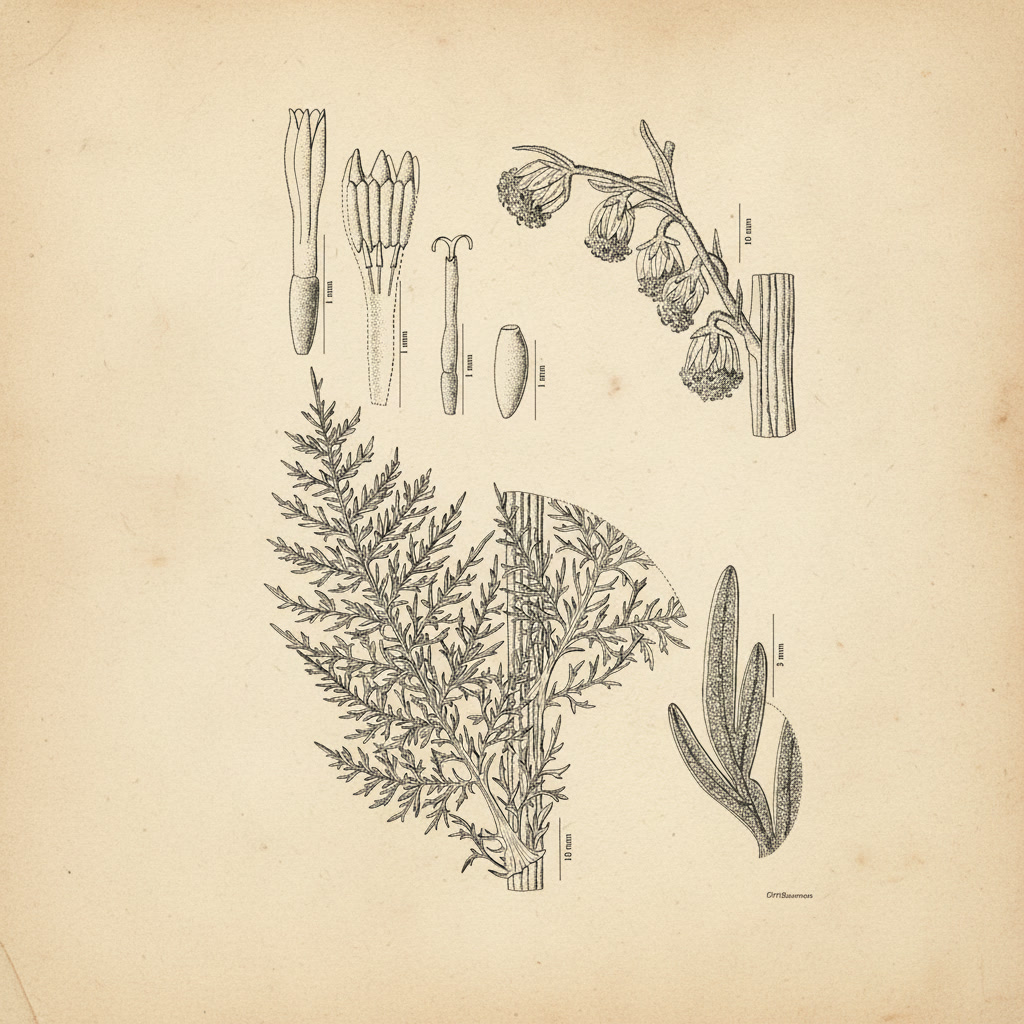
Artemisia afra, known as African Wormwood, Umhlonyane in Zulu, or Wilde Als in Afrikaans, holds the distinction of being the most widely used traditional medicine plant in southern Africa. No other botanical crosses as many cultural, linguistic, and geographic boundaries — it is used by Zulu, Xhosa, Sotho, Tswana, Khoi, Cape Malay, and Afrikaner communities, each with their own preparation methods and indications. The plant is a fast-growing aromatic shrub with deeply divided silver-green leaves that release a powerful camphor-like scent when crushed. It grows from sea level to alpine grassland and is one of the easiest medicinal plants to cultivate. During the COVID-19 pandemic it attracted international attention when several African governments investigated its antiviral potential. It is closely related to Artemisia annua, the source of the antimalarial drug artemisinin, though Artemisia afra does not contain artemisinin itself. Its breadth of traditional use and growing scientific validation make it one of the most important plants in the SABM registry.
- Alpha-thujone and beta-thujone (monoterpenes)
- Camphor
- 1,8-cineole (eucalyptol)
- Chamazulene
- Flavonoids (luteolin, quercetin)
- Sesquiterpene lactones
- Steam inhalation of boiled leaves for colds, flu, sinusitis, and bronchitis
- Leaf infusion taken internally for fever, coughs, and loss of appetite
- Poultice of warmed leaves applied to painful joints and muscles
- Used as an enema preparation for intestinal parasites
- Placed in bathwater for skin conditions and general fortification
- Burned as incense in ritual and ceremonial contexts across multiple traditions
- Antimicrobial activity against Staphylococcus aureus and E. coli confirmed in multiple studies (Van Wyk et al., 2009)
- Anti-inflammatory activity of flavonoid fraction documented (Mukinda & Syce, 2007)
- Antispasmodic effects on smooth muscle demonstrated in vitro (Deutschländer et al., 2009)
- Antidiabetic potential shown in streptozotocin-induced diabetic rat model (Swanepoel et al., 2016)
Adaptable across a wide range of climates — from Mediterranean to highland grassland. Frost-tolerant. Fast-growing in well-drained soils. Rainfall 400–1200mm per annum.
Western Cape, Eastern Cape, KwaZulu-Natal Drakensberg, Lesotho, Limpopo highlands — cultivated in gardens across all provinces
Widely sold fresh and dried in muthi markets, health shops, and pharmacies. Small-scale commercial cultivation is well established. One of the easiest South African medicinal plants to grow at scale. Exported in dried form to diaspora communities in the UK, Netherlands, and Australia.
Artemisia afra is perhaps the most cross-cultural plant in South African ethnobotany. Zulu izinyanga prescribe Umhlonyane steam treatments as a first response to any respiratory illness. Xhosa healers use it in initiation ceremonies and as a protective medicine. Sotho communities prepare it as a bitter tea for digestive complaints. Afrikaner households kept a bush of Wilde Als in the garden as a living medicine chest — leaves were infused in boiling water and inhaled under a towel for any cold or chest complaint. Cape Malay apothecaries incorporated it into compound remedies. During the 1918 influenza pandemic it was one of the most widely administered treatments in rural South Africa. Its Zulu name Umhlonyane is deeply embedded in cultural memory and it is among the plants most frequently cited in South African oral health traditions.