Baobab
Adansonia digitata
Production
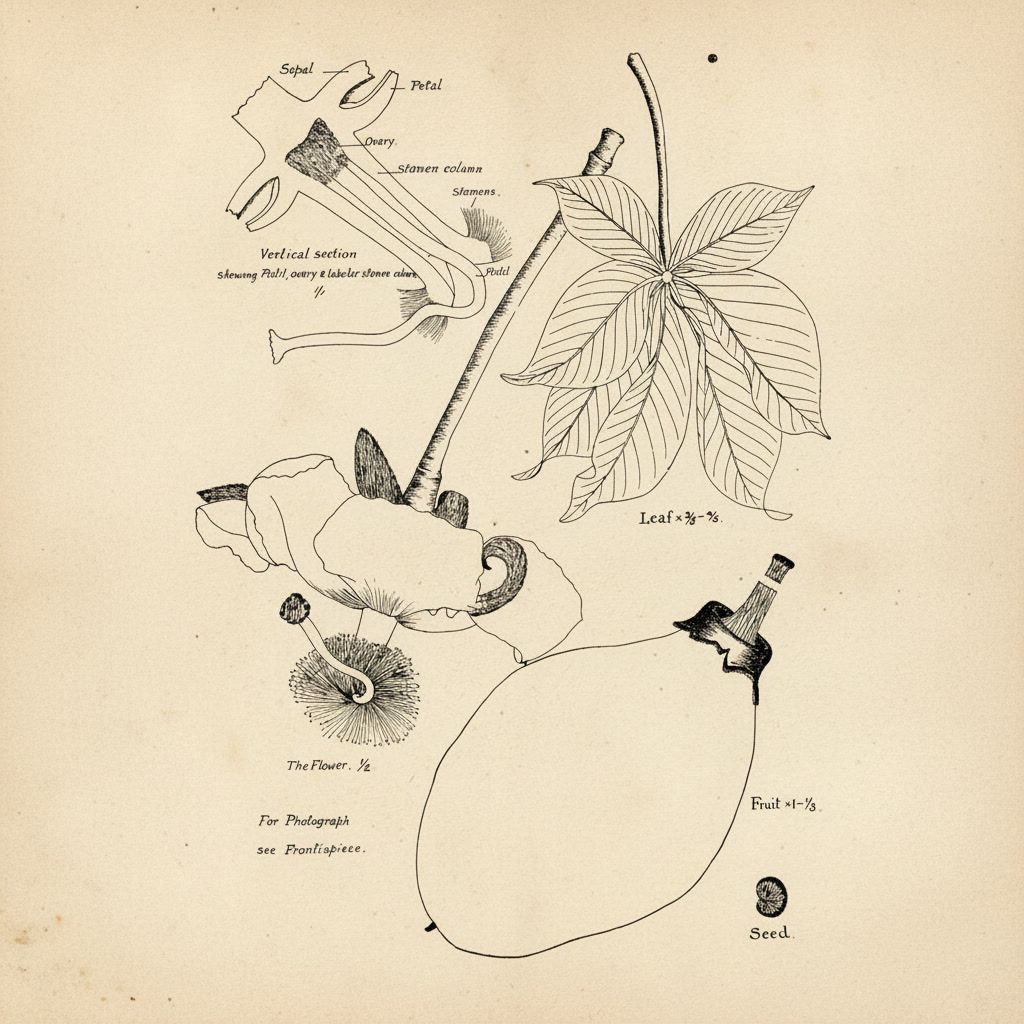
Adansonia digitata, the African Baobab, is one of the most recognisable and ecologically extraordinary trees on earth. Known as the Tree of Life across sub-Saharan Africa, it can live for more than 2000 years, grow to 30 metres in height, and store up to 100,000 litres of water in its massive spongy trunk. In South Africa its range is limited to the hot lowveld and bushveld of Limpopo and northern KwaZulu-Natal, where ancient specimens dominate the landscape and serve as landmarks, community gathering places, and living pharmacies. The Baobab's fruit — a hard-shelled pod containing a dry powdery pulp with an exceptionally high vitamin C, calcium, and antioxidant content — was approved as a novel food ingredient by the European Food Safety Authority in 2008 and the US FDA in 2009, triggering a global superfood export industry. South African Baobab products now reach premium health food markets across four continents. The tree also yields nutritious leaves, protein-rich seeds, and bark fibre used in traditional crafts and medicine.
- Vitamin C (fruit pulp contains 6x the vitamin C of oranges by weight)
- Calcium (highest of any fruit — higher than milk by weight)
- Tartaric acid and citric acid
- Polyphenols and flavonoids
- Triterpenoids (bark)
- Cyclitols (fruit pulp)
- Fruit pulp dissolved in water as a rehydration drink and fever remedy
- Leaf powder used as a nutritional supplement for malnourished children
- Bark decoction used to treat fever, malaria, and kidney disease
- Seed oil applied topically for skin moisturising and wound healing
- Pulp used as a binding agent for traditional medicinal preparations
- Fruit pulp demonstrates significant prebiotic activity supporting Lactobacillus growth (Coe & Ryan, 2016)
- High antioxidant capacity confirmed by ORAC and DPPH assays — among highest of any fruit tested
- Blood glucose modulation potential shown in preliminary human trials (Coe et al., 2013)
- Anti-inflammatory activity of bark triterpenoids documented in vitro (Orisakeye & Ale, 2014)
Hot semi-arid to arid. Extremely drought-tolerant once established. Cannot tolerate waterlogging or prolonged frost. Rainfall 200–700mm per annum.
Vhembe district (Limpopo), Kruger National Park lowveld, Tuli Block area — South Africa sits at the southern margin of the natural range
Fruit is harvested from wild trees under community and conservation area permits. No plantation cultivation exists in South Africa. Fruit pulp is processed and exported by several Limpopo-based enterprises. Seed oil extraction is a growing cottage industry in Vhembe communities.
For the Venda, Tsonga, and Northern Sotho peoples of Limpopo, the Baobab is a sacred and central presence in cultural life. Ancient specimens serve as community meeting places, rain-making sites, and landmarks that feature in oral history stretching back dozens of generations. The Venda name Muvhuyu reflects deep cultural reverence. Fruit pulp was a critical food security resource during droughts — dissolved in water to make a nutritious porridge or drink. Bark fibre was woven into rope, baskets, and clothing. Leaves were dried and powdered as a nutritional additive to food. Hollow ancient trunks have served as shelters, water reservoirs, and burial sites. Several individual South African Baobabs have names and documented histories spanning centuries — the Sunland Baobab in Limpopo, before it collapsed in 2017, was estimated at over 1700 years old and contained a bar inside its hollow trunk.