South African Botanical Registry

Bulbine

Bulbine frutescens
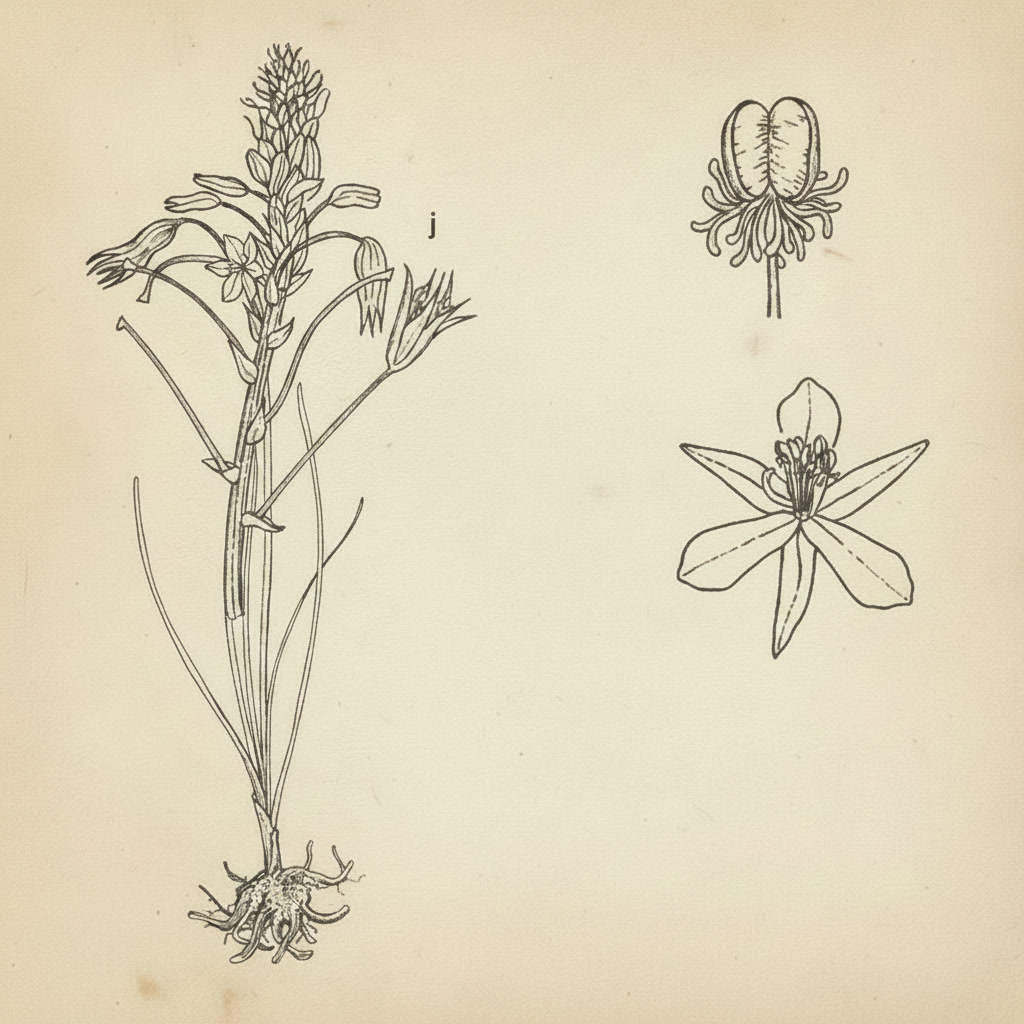
← back Explore
Photo Credit
John van der Berg · Cederberg Nature Reserve · March 2024
Common Names
Afrikaans
Rankkopieva · Geelkatstert
English
Stalked Bulbine · Burn Jelly Plant
Khoikhoi
kopieva
Ndebele
not documented
San
not documented
Sepedi
not documented
Sesotho
not documented
Setswana
not documented
Swati
not documented
Tsonga
not documented
Venda
not documented
Xhosa
ibhucu
Zulu
ibhucu
Common Name
Bulbine
Scientific Name
Bulbine frutescens
Family
Asphodelaceae
Native Region
Eastern and Western Cape, KwaZulu-Natal, and the Eastern Free State — thriving in rocky outcrops, disturbed ground, and coastal scrub from sea level to 1800m
Annual
Production
50–200 t
Export Revenue
R10–30m
Export Markets
EU, USA
Livelihoods
500–1,000
Protection & Benefit Sharing
No GI No GI protection. Often marketed internationally as an Aloe vera alternative without geographic designation.
No BSA No formal agreement. Khoikhoi traditional knowledge (kopieva) preserved in Afrikaans name but communities not formally recognised.
Organic Small certified organic production for cosmeceutical ingredient market.
Wild Harvest Mix of cultivation and wild harvest. Widely available — no sustainability concerns.
Provinces
ECEastern Cape
FSFree State
GTGauteng
KZNKwaZulu-Natal
LIMLimpopo
MPMpumalanga
NCNorthern Cape
NWNorth West
WCWestern Cape
Key
Registered farm
Certified organic
Introduction

Bulbine frutescens, known as Rankkopieva, Stalked Bulbine, or Snake Flower, is one of the most medicinally versatile and horticulturally popular plants in South Africa. A succulent subshrub with fleshy bright green leaves and cheerful yellow or orange flower spikes, it is both a common garden plant and a serious medicinal resource. The fresh leaf gel has been used for centuries by Khoisan, Xhosa, and Zulu communities for wound healing, burns, skin conditions, and rashes — in much the same way as Aloe vera gel. Scientific research has confirmed that Bulbine gel contains unique bioactive compounds not found in Aloe, including knipholone anthrones with potent antimicrobial and anti-inflammatory properties. Despite its impressive pharmacological profile and easy cultivation, Bulbine remains largely underdeveloped commercially — a situation that is beginning to change as South African cosmetic and pharmaceutical companies recognise its potential. It is one of the most drought-tolerant medicinal plants in the registry and among the easiest to cultivate at scale, making it an attractive candidate for sustainable commercial development.

Active Compounds
  • Knipholone (anthrone — primary antimicrobial bioactive)
  • Bulbine anthrones
  • Acetylated glucomannans (gel polysaccharides)
  • Flavonoids (luteolin, isorhamnetin)
  • Tannins
Traditional Uses
  • Fresh leaf gel applied directly to burns, wounds, and insect bites
  • Used for eczema, psoriasis, and fungal skin infections
  • Leaf juice taken for mouth ulcers and cracked lips
  • Applied to nappy rash and skin irritation in infants
  • Used for sexually transmitted infections in traditional Xhosa and Zulu medicine
  • Leaf preparations taken internally for vomiting, convulsions, and blood disorders
Clinically Validated
  • Knipholone demonstrated significant antimicrobial activity against Staphylococcus aureus and Candida albicans (Van Wyk et al., 2009)
  • Wound healing activity of leaf gel confirmed in excision wound model — comparable to 1% silver sulfadiazine (Pather et al., 2011)
  • Anti-inflammatory activity of anthrone fraction documented in multiple in vitro studies
  • Antifungal properties confirmed against dermatophytes causing ringworm and athlete's foot
Cultivation

Extremely adaptable. Tolerates drought, poor soils, coastal salt wind, and light frost. Full sun to light shade. Rainfall 200–800mm per annum. One of the most water-wise medicinal plants available.

Cultivated across all South African provinces as a garden plant. Wild populations concentrated in the Eastern Cape, Western Cape, and KwaZulu-Natal coast.

Commercial & Trade Notes

Predominantly sold as a garden plant. Medicinal leaf gel is processed by a small number of South African cosmetic companies. Large-scale pharmaceutical or cosmetic cultivation has not yet been established despite strong commercial potential. Easy propagation from cuttings makes scale-up straightforward.

Indigenous Knowledge

Bulbine frutescens has been a first-aid plant for Khoisan communities of the Cape for thousands of years. The practice of breaking a leaf and applying the fresh gel to a cut, burn, or rash is one of the most widespread pieces of indigenous botanical knowledge in South Africa — known to rural and urban communities alike across ethnic boundaries. Xhosa healers use it for skin diseases and as part of compound preparations for blood disorders. Zulu traditional medicine incorporates it for sexually transmitted infections and internal complaints. Its Afrikaans name Rankkopieva reflects its long integration into Cape folk medicine. Unlike many traditional plants whose knowledge is held exclusively by specialists, Bulbine gel application is general household knowledge — a testament to how deeply the plant is embedded in South African healing culture.

Health & Wellness
Articles for Bulbine are being curated.
Subscribe to be notified when this section launches.
Innovation & R&D · Free
"Knipholone isolation is attracting pharmaceutical interest for topical antibiotic and antifungal applications. Several South African natural cosmetic brands have launched Bulbine gel products as an Aloe vera alternative. Research at Rhodes University is investigating Bulbine polysaccharides for wound dressing and tissue engineering applications."
Intelligence summary for Bulbine.
Bulbine frutescens, known as Rankkopieva, Stalked Bulbine, or Snake Flower, is one of the most medicinally versatile and horticulturally popular plants in South Africa. A succulent subshrub with fleshy bright green leaves and cheerful yellow or orange flower spikes, it is both a common garden plant and a serious medicinal resource. The fresh leaf gel has been used for centuries by Khoisan, Xhosa, and Zulu communities for wound healing, burns, skin conditions, and rashes — in much the same way as Aloe vera gel. Scientific research has confirmed that Bulbine gel contains unique bioactive compounds not found in Aloe, including knipholone anthrones with potent antimicrobial and anti-inflammatory properties. Despite its impressive pharmacological profile and easy cultivation, Bulbine remains largely underdeveloped commercially — a situation that is beginning to change as South African cosmetic and pharmaceutical companies recognise its potential. It is one of the most drought-tolerant medicinal plants in the registry and among the easiest to cultivate at scale, making it an attractive candidate for sustainable commercial development.
Link sent →
Innovation & R&D · Free
Intelligence bulletin — Bulbine
SABM Registry analysis.
South Africa's most underrated healing plant — a succulent with bright yellow or orange flower spikes whose gel-filled leaves rival Aloe vera for wound healing and skin repair, yet remain largely unknown outside southern Africa.
Link sent →
IK & Heritage
Articles for Bulbine are being curated.
Subscribe to be notified when this section launches.
Culture
Articles for Bulbine are being curated.
Subscribe to be notified when this section launches.
Agronomy · Free
"Among the easiest medicinal plants to cultivate in South Africa. Propagates readily from cuttings. Harvestable within 12 months. Thrives without irrigation in most South African climate zones. Suitable for small-scale and large-scale cultivation with minimal input costs."
Intelligence summary for Bulbine.
Bulbine frutescens, known as Rankkopieva, Stalked Bulbine, or Snake Flower, is one of the most medicinally versatile and horticulturally popular plants in South Africa. A succulent subshrub with fleshy bright green leaves and cheerful yellow or orange flower spikes, it is both a common garden plant and a serious medicinal resource. The fresh leaf gel has been used for centuries by Khoisan, Xhosa, and Zulu communities for wound healing, burns, skin conditions, and rashes — in much the same way as Aloe vera gel. Scientific research has confirmed that Bulbine gel contains unique bioactive compounds not found in Aloe, including knipholone anthrones with potent antimicrobial and anti-inflammatory properties. Despite its impressive pharmacological profile and easy cultivation, Bulbine remains largely underdeveloped commercially — a situation that is beginning to change as South African cosmetic and pharmaceutical companies recognise its potential. It is one of the most drought-tolerant medicinal plants in the registry and among the easiest to cultivate at scale, making it an attractive candidate for sustainable commercial development.
Link sent →
Agronomy · Free
Intelligence bulletin — Bulbine
SABM Registry analysis.
South Africa's most underrated healing plant — a succulent with bright yellow or orange flower spikes whose gel-filled leaves rival Aloe vera for wound healing and skin repair, yet remain largely unknown outside southern Africa.
Link sent →
Legislation
Articles for Bulbine are being curated.
Subscribe to be notified when this section launches.
Projects
Articles for Bulbine are being curated.
Subscribe to be notified when this section launches.
Intelligence Pulse
Articles for Bulbine are being curated.
Subscribe to be notified when this section launches.