South African Botanical Registry

Cape Chamomile

Eriocephalus punctulatus
← back Explore
Photo Credit
John van der Berg · Cederberg Nature Reserve · March 2024
Common Names
Afrikaans
Kapokbossie · Wilde Roosmaryn
English
Cape Chamomile · Wild Rosemary
Khoikhoi
not documented
Ndebele
not documented
San
not documented
Sepedi
not documented
Sesotho
not documented
Setswana
not documented
Swati
not documented
Tsonga
not documented
Venda
not documented
Xhosa
not documented
Zulu
not documented
Common Name
Cape Chamomile
Scientific Name
Eriocephalus punctulatus
Family
Asteraceae
Native Region
Western and Northern Cape — endemic to South African fynbos and Karoo biomes, thriving in dry rocky slopes and sandy flats from the Cederberg to the Tankwa Karoo
Annual
Production
2–5 t oil
Export Revenue
R20–50m
Export Markets
Germany, France, Switzerland
Livelihoods
100–300
Protection & Benefit Sharing
No GI No GI protection. Adulteration with other Eriocephalus species is a significant commercial problem. Certification critical.
No BSA No formal agreement. Khoikhoi communities held primary knowledge — largely lost before documentation was possible.
Organic Certified organic production available. Commands highest premium in aromatherapy market. R10,000–20,000/kg for certified organic blue oil.
Wild Harvest Mix of wild harvest and cultivation in Western Cape mountains. Small producer base — certification protects premium pricing.
Provinces
ECEastern Cape
FSFree State
GTGauteng
KZNKwaZulu-Natal
LIMLimpopo
MPMpumalanga
NCNorthern Cape
NWNorth West
WCWestern Cape
Key
Registered farm
Certified organic
Introduction

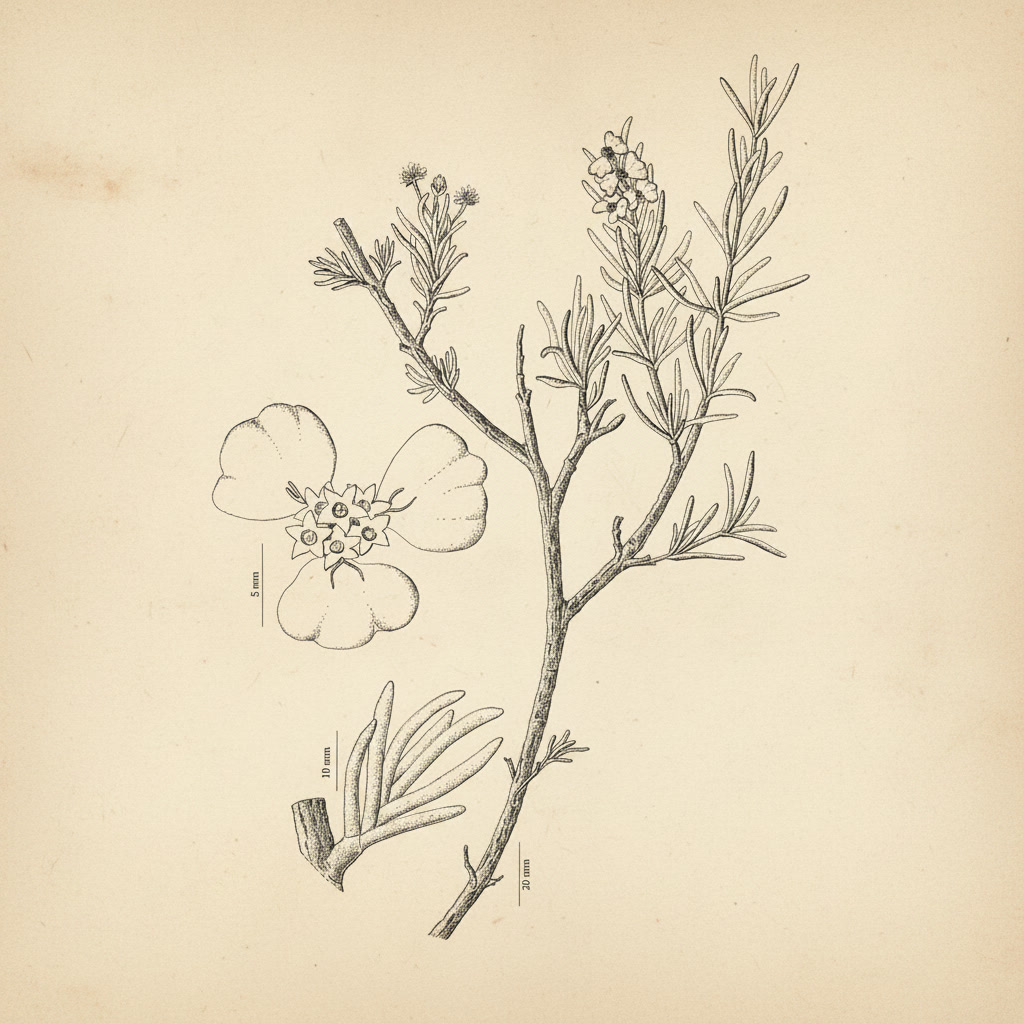
Eriocephalus punctulatus, known as Cape Chamomile or Wild Rosemary, produces one of the most commercially valuable essential oils in South Africa. The plant is a small, highly aromatic shrub covered in fine silver-grey leaves and masses of small white daisy flowers with yellow centres. Steam distillation of the flowering tops yields an essential oil that turns a distinctive deep blue colour due to its exceptionally high chamazulene content — a compound also found in German Chamomile that gives both oils their powerful anti-inflammatory and calming properties. Cape Chamomile oil is considered by many aromatherapists and natural fragrance specialists to be superior to German Chamomile for skin applications due to its unique ester profile and lower irritation potential. South Africa is the world's only significant source of this oil, and demand from European and American aromatherapy, cosmetic, and pharmaceutical markets has grown steadily over the past two decades. The plant grows in some of the most botanically diverse and threatened ecosystems on earth — the Cape Floristic Region — making sustainable harvest and cultivation critical priorities.

Active Compounds
  • Chamazulene (anti-inflammatory sesquiterpene — responsible for deep blue colour)
  • Alpha-bisabolol oxide
  • Camphor
  • 1,8-cineole (eucalyptol)
  • Monoterpene esters (bornyl acetate, isobornyl acetate)
  • Flavonoids
Traditional Uses
  • Leaf infusion taken for colic, digestive complaints, and nervous tension
  • Steam inhalation used for colds, sinusitis, and headaches
  • Topical application of crushed leaves for skin irritations and wounds
  • Used as a sedative tea for insomnia and anxiety
  • Applied as a wash for eczema, nappy rash, and allergic skin reactions
Clinically Validated
  • Chamazulene confirmed as a potent anti-inflammatory inhibiting leukotriene synthesis (Safayhi et al., 1994)
  • Alpha-bisabolol demonstrated wound healing and skin-soothing activity in multiple studies
  • Antimicrobial activity of essential oil against Staphylococcus aureus and Candida confirmed
  • Anxiolytic effects of chamomile preparations documented in human clinical trials — relevant to Cape Chamomile's similar compound profile
Cultivation

Mediterranean and semi-arid fynbos. Requires well-drained, nutrient-poor, acidic soils. Full sun. Drought-tolerant once established. Sensitive to waterlogging. Rainfall 200–500mm per annum.

Cederberg, Tankwa Karoo, Bokkeveld Plateau, Namaqualand — all within the Western and Northern Cape

Commercial & Trade Notes

Essential oil production is the primary commercial application. South Africa exports several tonnes of Cape Chamomile oil annually to European and American markets. A small number of certified distillers operate in the Western Cape. Wild harvest is the primary source but cultivation is being developed to ensure supply security.

Indigenous Knowledge

The Khoikhoi and early Cape settlers knew Eriocephalus species collectively as Kapokbossie or Wild Rosemary — a name that reflects the plant's superficial resemblance to the European herb. Khoikhoi healers used leaf infusions for stomach complaints, colic in children, and as a calming tea. Cape Malay apothecaries incorporated it into compound remedies for nervous complaints and skin conditions. Afrikaner communities used it as a household remedy for infant colic — a tradition that persists in rural Western Cape communities today. The essential oil distillation tradition developed during the 20th century as European demand for blue chamomile oil grew, and Cape Chamomile became an important niche export. Local knowledge of the plant's calming properties predates essential oil extraction by centuries and informed the commercial development of this product.

Health & Wellness
Articles for Cape Chamomile are being curated.
Subscribe to be notified when this section launches.
Innovation & R&D · Free
"Cape Chamomile essential oil is attracting interest from luxury natural perfume houses in France and the UK seeking unique African-origin ingredients. Research into chamazulene standardisation for pharmaceutical anti-inflammatory preparations is ongoing at the University of the Western Cape. Several South African cosmetic brands have launched Cape Chamomile skincare ranges targeting sensitive skin markets."
Intelligence summary for Cape Chamomile.
Eriocephalus punctulatus, known as Cape Chamomile or Wild Rosemary, produces one of the most commercially valuable essential oils in South Africa. The plant is a small, highly aromatic shrub covered in fine silver-grey leaves and masses of small white daisy flowers with yellow centres. Steam distillation of the flowering tops yields an essential oil that turns a distinctive deep blue colour due to its exceptionally high chamazulene content — a compound also found in German Chamomile that gives both oils their powerful anti-inflammatory and calming properties. Cape Chamomile oil is considered by many aromatherapists and natural fragrance specialists to be superior to German Chamomile for skin applications due to its unique ester profile and lower irritation potential. South Africa is the world's only significant source of this oil, and demand from European and American aromatherapy, cosmetic, and pharmaceutical markets has grown steadily over the past two decades. The plant grows in some of the most botanically diverse and threatened ecosystems on earth — the Cape Floristic Region — making sustainable harvest and cultivation critical priorities.
Link sent →
Innovation & R&D · Free
Intelligence bulletin — Cape Chamomile
SABM Registry analysis.
The Cape's answer to European Chamomile — a small aromatic fynbos shrub producing one of the most prized essential oils in the global aromatherapy and natural fragrance industry, with a deep blue colour and extraordinary calming properties.
Link sent →
IK & Heritage
Articles for Cape Chamomile are being curated.
Subscribe to be notified when this section launches.
Culture
Articles for Cape Chamomile are being curated.
Subscribe to be notified when this section launches.
Agronomy · Free
"Cultivation in the Cederberg and Bokkeveld is being scaled up to meet growing demand. Plants reach flowering maturity in 18 months. Essential oil yield of 0.3–0.5% from fresh flowering material. Organic certification is increasingly important for export market access. Sustainable wild harvest protocols are being developed by CapeNature in collaboration with the industry."
Intelligence summary for Cape Chamomile.
Eriocephalus punctulatus, known as Cape Chamomile or Wild Rosemary, produces one of the most commercially valuable essential oils in South Africa. The plant is a small, highly aromatic shrub covered in fine silver-grey leaves and masses of small white daisy flowers with yellow centres. Steam distillation of the flowering tops yields an essential oil that turns a distinctive deep blue colour due to its exceptionally high chamazulene content — a compound also found in German Chamomile that gives both oils their powerful anti-inflammatory and calming properties. Cape Chamomile oil is considered by many aromatherapists and natural fragrance specialists to be superior to German Chamomile for skin applications due to its unique ester profile and lower irritation potential. South Africa is the world's only significant source of this oil, and demand from European and American aromatherapy, cosmetic, and pharmaceutical markets has grown steadily over the past two decades. The plant grows in some of the most botanically diverse and threatened ecosystems on earth — the Cape Floristic Region — making sustainable harvest and cultivation critical priorities.
Link sent →
Agronomy · Free
Intelligence bulletin — Cape Chamomile
SABM Registry analysis.
The Cape's answer to European Chamomile — a small aromatic fynbos shrub producing one of the most prized essential oils in the global aromatherapy and natural fragrance industry, with a deep blue colour and extraordinary calming properties.
Link sent →
Legislation
Articles for Cape Chamomile are being curated.
Subscribe to be notified when this section launches.
Projects
Articles for Cape Chamomile are being curated.
Subscribe to be notified when this section launches.
Intelligence Pulse
Articles for Cape Chamomile are being curated.
Subscribe to be notified when this section launches.