South African Botanical Registry

Honeybush

Cyclopia genistoides
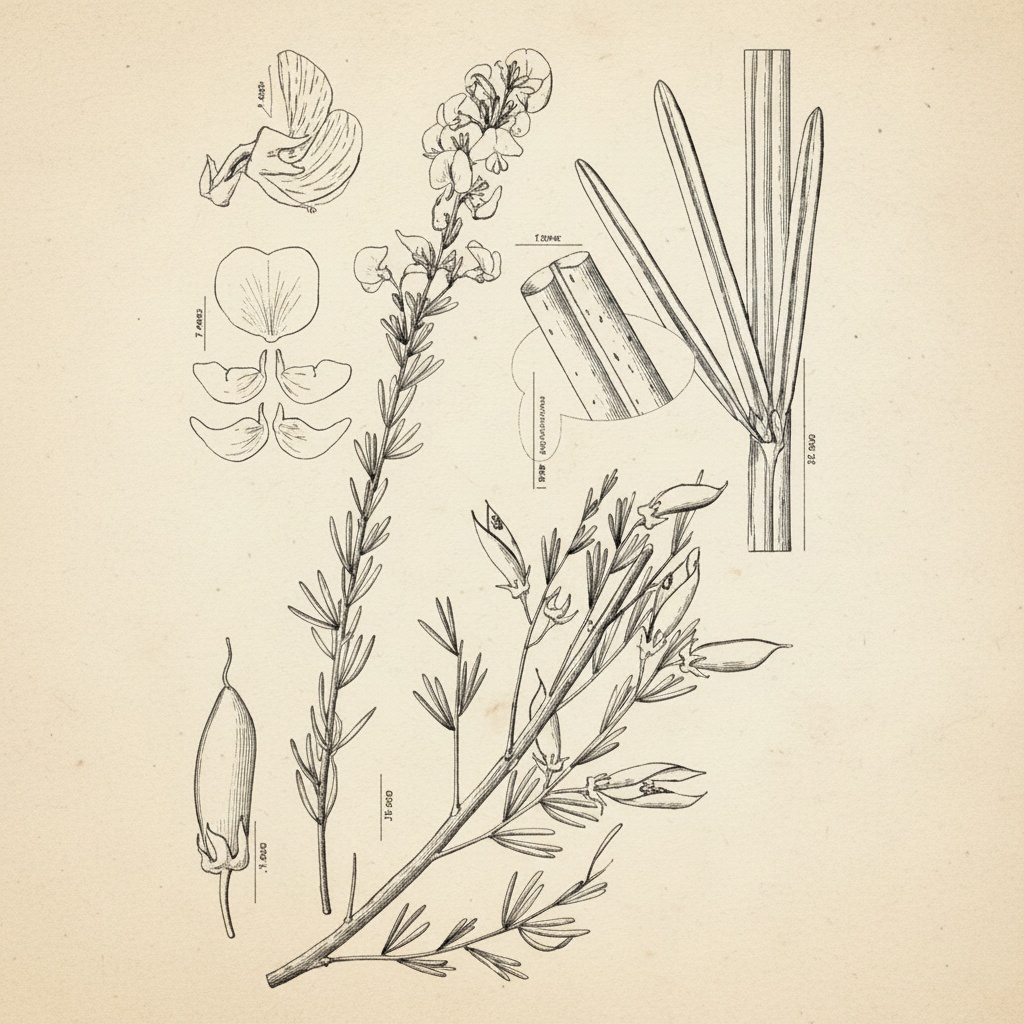
← back Explore
Photo Credit
John van der Berg · Cederberg Nature Reserve · March 2024
Common Names
Afrikaans
Heuningbos · Bergtee
English
Honeybush · Honey Tea
Khoikhoi
not documented
Ndebele
not documented
San
not documented
Sepedi
not documented
Sesotho
not documented
Setswana
not documented
Swati
not documented
Tsonga
not documented
Venda
not documented
Xhosa
not documented
Zulu
not documented
Common Name
Honeybush
Scientific Name
Cyclopia genistoides
Family
Fabaceae
Native Region
Endemic to the Western Cape — found exclusively in the Fynbos biome along the coastal mountains and lowlands from the Bokkeveld to the Langeberg, typically at altitudes of 0–1200m
Annual
Production
400–800 t
Export Revenue
R40–80m
Export Markets
Germany, Netherlands, USA
Livelihoods
1,000–2,000
Protection & Benefit Sharing
GI Pending Geographical Indication application in progress. Western Cape fynbos designation will protect against international counterfeiting.
No BSA No formal agreement. Khoikhoi communities brewed Honeybush for generations before Dutch settlers arrived — their knowledge was never formally documented or compensated.
Organic Certified organic production growing rapidly. Organic segment commands 25–40% price premium in EU market.
Wild Harvest Predominantly cultivated. Wild harvest minimal. Sustainable cultivation practices well established in Overberg and Garden Route.
Provinces
ECEastern Cape
FSFree State
GTGauteng
KZNKwaZulu-Natal
LIMLimpopo
MPMpumalanga
NCNorthern Cape
NWNorth West
WCWestern Cape
Key
Registered farm
Certified organic
Introduction

Cyclopia genistoides, known as Honeybush or Heuningbos, is one of South Africa's most beloved and commercially significant herbal teas. Endemic to the Western Cape fynbos, it produces clusters of bright yellow pea-like flowers with a distinctive honey fragrance that gives the plant its name. The fermented and dried leaves and stems brew into a naturally sweet, caffeine-free tea with a smooth, mellow flavour that requires no added sugar. Honeybush has been consumed by Cape communities for centuries and entered commercial production in the late 20th century as international demand for caffeine-free herbal beverages grew. Today South Africa exports Honeybush to over 30 countries, with major markets in Germany, the USA, Japan, and the Netherlands. The tea is rich in antioxidants, particularly isoflavones and xanthones with documented health benefits for bone health, hormonal balance, and metabolic function. The Honeybush industry is certified, regulated, and increasingly focused on sustainability as wild fynbos populations face pressure from agriculture and climate change. It stands alongside Rooibos as one of the twin pillars of South Africa's botanical beverage export industry.

Active Compounds
  • Mangiferin (xanthone — primary antioxidant bioactive)
  • Isomangiferin
  • Hesperidin (flavanone)
  • Formononetin (isoflavone — phytoestrogenic)
  • Luteolin
  • Polyphenols (broad spectrum)
Traditional Uses
  • Tea taken as a general wellness tonic and antioxidant beverage
  • Used for coughs, colds, and respiratory complaints
  • Taken to relieve menopausal symptoms — hot flushes and hormonal imbalance
  • Used as a digestive aid and appetite stimulant
  • Given to infants for colic and digestive discomfort
  • Applied topically as a skin wash for minor irritations
Clinically Validated
  • Mangiferin demonstrated significant antioxidant, anti-inflammatory, and antidiabetic activity in multiple studies (Joubert et al., 2008)
  • Phytoestrogenic activity of formononetin confirmed — relevant to menopausal symptom relief (Verhoeyen et al., 2012)
  • Bone density preservation potential shown in ovariectomised rat model — relevant to postmenopausal bone loss
  • Inhibition of adipogenesis and potential anti-obesity effects demonstrated in vitro (Muller et al., 2011)
  • Antimicrobial activity against food-borne pathogens documented
Cultivation

Mediterranean fynbos. Requires well-drained, acidic, nutrient-poor soils. Full sun. Drought-tolerant once established. Sensitive to waterlogging. Rainfall 300–700mm per annum concentrated in winter months.

Western Cape coastal mountains and lowlands — Overberg, Garden Route, Klein Karoo margins, Boland

Commercial & Trade Notes

Both wild-harvested and cultivated under permit. South Africa exports approximately 1200 tonnes of dried Honeybush annually. The industry is represented by the South African Honeybush Tea Association (SAHTA). Certified organic production is growing. Processing involves cutting, bruising, and fermentation of plant material followed by drying — similar to Rooibos processing.

Indigenous Knowledge

Honeybush has been consumed as a tea by Cape communities for at least 300 years. Khoikhoi people were the first recorded users, brewing the fragrant leaves as a beverage and using it for respiratory complaints. Cape Malay and Afrikaner communities adopted it readily, and it became a household tea across the Western Cape. Unlike Rooibos, which has a more defined indigenous knowledge history with the Khoisan, Honeybush's traditional use is more broadly distributed across the Cape's diverse cultural communities. It was particularly valued by nursing mothers — given to infants for colic and consumed by mothers to support milk production. Rural Western Cape communities have always distinguished between the different Cyclopia species by taste and fragrance, demonstrating sophisticated local botanical knowledge that preceded formal scientific taxonomy. The commercial industry has grown directly from this long tradition of domestic use and community knowledge.

Health & Wellness
Articles for Honeybush are being curated.
Subscribe to be notified when this section launches.
Innovation & R&D · Free
"Mangiferin extraction for nutraceutical and pharmaceutical applications is an active research area. The University of Stellenbosch's Department of Food Science has published extensively on Honeybush bioactives. Several Japanese cosmetic companies are incorporating Honeybush extract into anti-ageing skincare formulations. A decaffeinated extract concentrate for food and beverage fortification is in commercial development."
Intelligence summary for Honeybush.
Cyclopia genistoides, known as Honeybush or Heuningbos, is one of South Africa's most beloved and commercially significant herbal teas. Endemic to the Western Cape fynbos, it produces clusters of bright yellow pea-like flowers with a distinctive honey fragrance that gives the plant its name. The fermented and dried leaves and stems brew into a naturally sweet, caffeine-free tea with a smooth, mellow flavour that requires no added sugar. Honeybush has been consumed by Cape communities for centuries and entered commercial production in the late 20th century as international demand for caffeine-free herbal beverages grew. Today South Africa exports Honeybush to over 30 countries, with major markets in Germany, the USA, Japan, and the Netherlands. The tea is rich in antioxidants, particularly isoflavones and xanthones with documented health benefits for bone health, hormonal balance, and metabolic function. The Honeybush industry is certified, regulated, and increasingly focused on sustainability as wild fynbos populations face pressure from agriculture and climate change. It stands alongside Rooibos as one of the twin pillars of South Africa's botanical beverage export industry.
Link sent →
Innovation & R&D · Free
Intelligence bulletin — Honeybush
SABM Registry analysis.
The Western Cape's golden tea — a naturally sweet, caffeine-free fynbos shrub whose honey-scented flowers and fermented leaves produce one of South Africa's most beloved herbal beverages and a growing global wellness export.
Link sent →
IK & Heritage
Articles for Honeybush are being curated.
Subscribe to be notified when this section launches.
Culture
Articles for Honeybush are being curated.
Subscribe to be notified when this section launches.
Agronomy · Free
"Cultivation is well established in the Overberg and Garden Route. Plants reach harvestable maturity in 18–24 months. Two harvests per year are possible under managed cultivation. Fermentation protocols are standardised across the industry. Climate change is shifting optimal growing areas southward — a challenge being addressed by SAHTA's adaptation research programme."
Intelligence summary for Honeybush.
Cyclopia genistoides, known as Honeybush or Heuningbos, is one of South Africa's most beloved and commercially significant herbal teas. Endemic to the Western Cape fynbos, it produces clusters of bright yellow pea-like flowers with a distinctive honey fragrance that gives the plant its name. The fermented and dried leaves and stems brew into a naturally sweet, caffeine-free tea with a smooth, mellow flavour that requires no added sugar. Honeybush has been consumed by Cape communities for centuries and entered commercial production in the late 20th century as international demand for caffeine-free herbal beverages grew. Today South Africa exports Honeybush to over 30 countries, with major markets in Germany, the USA, Japan, and the Netherlands. The tea is rich in antioxidants, particularly isoflavones and xanthones with documented health benefits for bone health, hormonal balance, and metabolic function. The Honeybush industry is certified, regulated, and increasingly focused on sustainability as wild fynbos populations face pressure from agriculture and climate change. It stands alongside Rooibos as one of the twin pillars of South Africa's botanical beverage export industry.
Link sent →
Agronomy · Free
Intelligence bulletin — Honeybush
SABM Registry analysis.
The Western Cape's golden tea — a naturally sweet, caffeine-free fynbos shrub whose honey-scented flowers and fermented leaves produce one of South Africa's most beloved herbal beverages and a growing global wellness export.
Link sent →
Legislation
Articles for Honeybush are being curated.
Subscribe to be notified when this section launches.
Projects
Articles for Honeybush are being curated.
Subscribe to be notified when this section launches.
Intelligence Pulse
Articles for Honeybush are being curated.
Subscribe to be notified when this section launches.