South African Botanical Registry

Kanna

Sceletium tortuosum
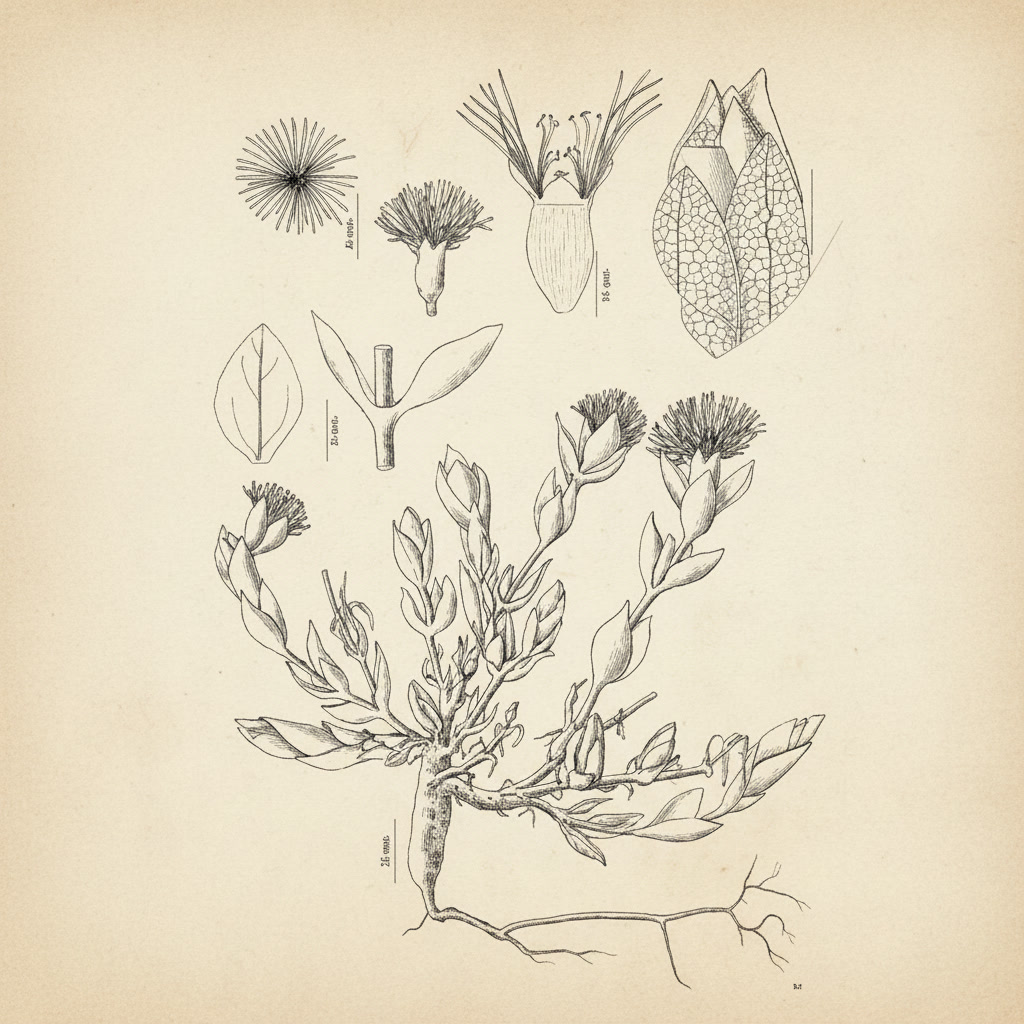
← back Explore
Photo Credit
John van der Berg · Cederberg Nature Reserve · March 2024
Common Names
Afrikaans
Kougoed · Kanna
English
Kanna · Kougoed
Khoikhoi
channa · kanna
Ndebele
not documented
San
/xhoba · kanna
Sepedi
not documented
Sesotho
not documented
Setswana
not documented
Swati
not documented
Tsonga
not documented
Venda
not documented
Xhosa
not documented
Zulu
not documented
Common Name
Kanna
Scientific Name
Sceletium tortuosum
Family
Aizoaceae
Native Region
Western and Northern Cape — endemic to South Africa, found in the Succulent Karoo and Fynbos biomes, particularly in the Little Karoo, Namaqualand, and the Knersvlakte
Annual
Production
20–80 t
Export Revenue
R30–80m
Export Markets
USA, EU, Australia
Livelihoods
300–800
Protection & Benefit Sharing
No GI No GI protection. SAHPRA regulatory guidance (2013) enabled commercialisation. International patent applications on mesembrine alkaloids active — benefit-sharing implications unresolved.
No BSA No formal agreement. Khoikhoi and San communities hold 3,000+ years of traditional knowledge. Commercial exploitation without benefit-sharing is an ongoing concern.
Organic Certified organic production available from Namaqualand and Western Cape producers.
Wild Harvest Mix of cultivation and limited wild harvest. Cultivation preferred to protect wild San heritage populations.
Provinces
ECEastern Cape
FSFree State
GTGauteng
KZNKwaZulu-Natal
LIMLimpopo
MPMpumalanga
NCNorthern Cape
NWNorth West
WCWestern Cape
Key
Registered farm
Certified organic
Introduction

Sceletium tortuosum, known as Kanna, Channa, or Kougoed, is one of the most historically significant and scientifically fascinating plants in South Africa. A small succulent native to the arid Karoo and Namaqualand, it has been used by Khoisan hunter-gatherers for thousands of years as a mood elevator, stress reliever, and hunger suppressant during long hunting expeditions. Archaeological evidence suggests its use dates back at least 3000 years, making it one of the oldest documented psychoactive plant medicines in Africa. The plant's primary bioactive compounds — mesembrine alkaloids — act as serotonin reuptake inhibitors and PDE4 inhibitors, giving Kanna a measurable antidepressant and anxiolytic pharmacological profile that modern science is only beginning to fully characterise. In the past decade, Kanna has attracted extraordinary commercial and scientific interest as the global mental health supplement market has exploded. Several patented Sceletium extracts — most notably Zembrin — are now sold in supplements across the USA, Europe, and Asia. South Africa holds sovereign rights over this plant and its traditional knowledge under the Nagoya Protocol, making benefit-sharing with Khoisan communities a central legal and ethical issue in its commercialisation.

Active Compounds
  • Mesembrine (primary alkaloid — serotonin reuptake inhibitor)
  • Mesembrenone (PDE4 inhibitor)
  • Mesembrenol
  • Tortuosamine
  • Delta-7-mesembrenone
Traditional Uses
  • Fermented plant material chewed as a mood elevator and stress reliever
  • Snuffed as a powder for rapid anxiolytic effect
  • Used to suppress hunger and thirst during long hunts
  • Applied to alleviate pain — rubbed on gums for toothache
  • Used by San healers in trance dance preparation
  • Smoked alone or with dagga for relaxation
Clinically Validated
  • Mesembrine confirmed as a selective serotonin reuptake inhibitor in vitro (Harvey et al., 2011)
  • Zembrin (patented extract) demonstrated significant reduction in anxiety in double-blind RCT (Nell et al., 2013)
  • PDE4 inhibition by mesembrenone suggests cognitive enhancement potential — confirmed in animal studies
  • Safety and tolerability of Sceletium extract confirmed in Phase I human clinical trial (Coetzee et al., 2016)
  • Reduction in amygdala reactivity to fearful stimuli shown in fMRI study (Terburg et al., 2013)
Cultivation

Arid to semi-arid Succulent Karoo. Extremely drought-tolerant. Full sun. Sandy or gravelly well-drained soils. Sensitive to frost and waterlogging. Rainfall 100–300mm per annum.

Little Karoo, Namaqualand, Knersvlakte, Tankwa Karoo — all within the Western and Northern Cape

Commercial & Trade Notes

Cultivation is well established for the extract industry. HGH Pharmaceuticals and other licensed producers grow certified Sceletium in the Western Cape. Zembrin extract is the most commercially successful patented Sceletium product, exported to supplement markets globally. Benefit-sharing agreements with Khoisan communities are legally required under South African biodiversity law.

Indigenous Knowledge

Kanna holds a central place in Khoisan cultural and spiritual life stretching back millennia. The San and Khoikhoi peoples fermented the plant by burying harvested material in animal skins or bags for several days — a process that transforms the alkaloid profile and enhances potency. The fermented product known as Kougoed was chewed, snuffed, or smoked before and after hunting expeditions, in healing ceremonies, and in social gatherings. San healers used it as part of the trance dance preparation — the altered state it induces was considered a gateway to the spirit world. When Dutch settlers arrived at the Cape, Khoikhoi people introduced them to Kanna and it was described in detail by early VOC botanists and travellers. The commercialisation of Sceletium has been controversial within Khoisan communities, some of whom feel their ancient knowledge has been appropriated without adequate compensation. The benefit-sharing framework established under the South African Biodiversity Act is an attempt to address this historical injustice.

Health & Wellness
Articles for Kanna are being curated.
Subscribe to be notified when this section launches.
Innovation & R&D · Free
"Mesembrine analogue synthesis is an active area of pharmaceutical research with potential applications in depression, anxiety, and cognitive decline. Several biotech companies in the USA and Europe are developing next-generation Sceletium-derived compounds. The nootropic supplement market — valued at USD 3.5 billion globally — is a primary growth driver for Kanna products."
Intelligence summary for Kanna.
Sceletium tortuosum, known as Kanna, Channa, or Kougoed, is one of the most historically significant and scientifically fascinating plants in South Africa. A small succulent native to the arid Karoo and Namaqualand, it has been used by Khoisan hunter-gatherers for thousands of years as a mood elevator, stress reliever, and hunger suppressant during long hunting expeditions. Archaeological evidence suggests its use dates back at least 3000 years, making it one of the oldest documented psychoactive plant medicines in Africa. The plant's primary bioactive compounds — mesembrine alkaloids — act as serotonin reuptake inhibitors and PDE4 inhibitors, giving Kanna a measurable antidepressant and anxiolytic pharmacological profile that modern science is only beginning to fully characterise. In the past decade, Kanna has attracted extraordinary commercial and scientific interest as the global mental health supplement market has exploded. Several patented Sceletium extracts — most notably Zembrin — are now sold in supplements across the USA, Europe, and Asia. South Africa holds sovereign rights over this plant and its traditional knowledge under the Nagoya Protocol, making benefit-sharing with Khoisan communities a central legal and ethical issue in its commercialisation.
Link sent →
Innovation & R&D · Free
Intelligence bulletin — Kanna
SABM Registry analysis.
The ancient mood medicine of the Khoisan — a small succulent whose fermented preparations have been used for thousands of years to relieve stress, anxiety, and hunger, and which is now at the centre of a global psychoactive wellness revolution.
Link sent →
IK & Heritage
Articles for Kanna are being curated.
Subscribe to be notified when this section launches.
Culture
Articles for Kanna are being curated.
Subscribe to be notified when this section launches.
Agronomy · Free
"Cultivation is viable in arid Western Cape conditions. Plants reach harvestable maturity in 2–3 years. Fermentation protocols are proprietary to licensed producers. Organic certification and Khoisan benefit-sharing compliance are increasingly required by international buyers."
Intelligence summary for Kanna.
Sceletium tortuosum, known as Kanna, Channa, or Kougoed, is one of the most historically significant and scientifically fascinating plants in South Africa. A small succulent native to the arid Karoo and Namaqualand, it has been used by Khoisan hunter-gatherers for thousands of years as a mood elevator, stress reliever, and hunger suppressant during long hunting expeditions. Archaeological evidence suggests its use dates back at least 3000 years, making it one of the oldest documented psychoactive plant medicines in Africa. The plant's primary bioactive compounds — mesembrine alkaloids — act as serotonin reuptake inhibitors and PDE4 inhibitors, giving Kanna a measurable antidepressant and anxiolytic pharmacological profile that modern science is only beginning to fully characterise. In the past decade, Kanna has attracted extraordinary commercial and scientific interest as the global mental health supplement market has exploded. Several patented Sceletium extracts — most notably Zembrin — are now sold in supplements across the USA, Europe, and Asia. South Africa holds sovereign rights over this plant and its traditional knowledge under the Nagoya Protocol, making benefit-sharing with Khoisan communities a central legal and ethical issue in its commercialisation.
Link sent →
Agronomy · Free
Intelligence bulletin — Kanna
SABM Registry analysis.
The ancient mood medicine of the Khoisan — a small succulent whose fermented preparations have been used for thousands of years to relieve stress, anxiety, and hunger, and which is now at the centre of a global psychoactive wellness revolution.
Link sent →
Legislation
Articles for Kanna are being curated.
Subscribe to be notified when this section launches.
Projects
Articles for Kanna are being curated.
Subscribe to be notified when this section launches.
Intelligence Pulse
Articles for Kanna are being curated.
Subscribe to be notified when this section launches.