Marula
Sclerocarya birrea
Production
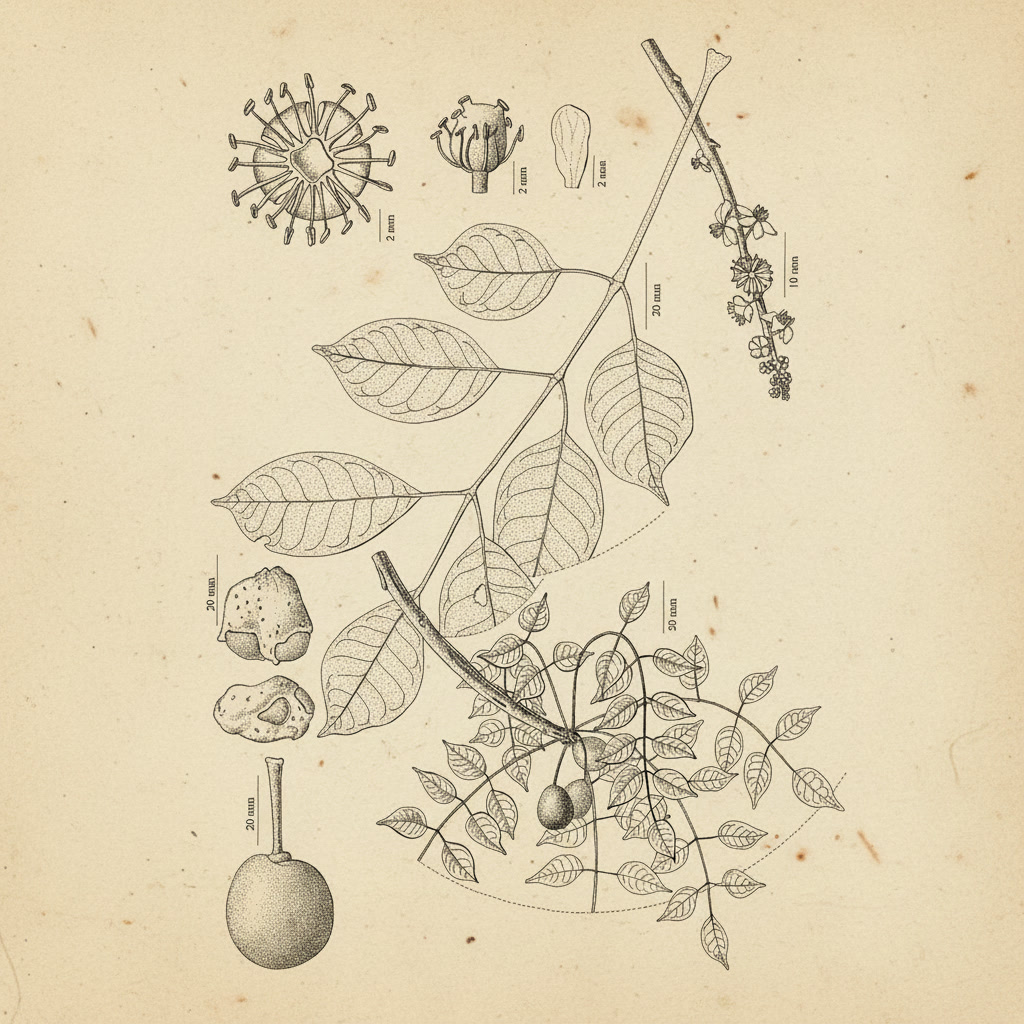
Sclerocarya birrea, the Marula tree, is one of the most iconic and economically significant trees in southern Africa. A large deciduous tree growing up to 18 metres tall, it dominates the bushveld landscape of Limpopo and Mpumalanga and is deeply woven into the cultural fabric of the communities that live alongside it. The Marula produces an extraordinary fruit — a small yellow drupe with white flesh containing four times the vitamin C of an orange and a large woody kernel that yields one of the most sought-after cosmetic oils in the world. Marula oil has become a global luxury cosmetic ingredient prized for its exceptional skin penetration, oxidative stability, and high oleic acid content. The Amarula cream liqueur, made from fermented Marula fruit, has made the tree famous worldwide. But beyond the liqueur and the cosmetic oil, Marula is a comprehensive nutritional, medicinal, and cultural resource — its bark, leaves, roots, fruit, and kernels all have documented traditional uses across dozens of communities in southern and east Africa. It is one of the most commercially developed indigenous trees in South Africa and a model for community-based natural resource management.
- Oleic acid (kernel oil — 70–78% composition)
- Palmitic acid and stearic acid
- Vitamin C (fruit pulp — 4x concentration of oranges)
- Procyanidins and flavonoids (bark)
- Tannins (bark and leaves)
- Sterols (beta-sitosterol, campesterol)
- Bark decoction taken for dysentery, diarrhoea, and stomach complaints
- Bark used as a malaria prophylactic and fever treatment
- Kernel oil applied to skin for moisturising, wound healing, and protection against sun and insects
- Fruit eaten fresh and fermented for nutritional and tonic purposes
- Leaf infusions used for eye complaints and skin conditions
- Bark smoke inhaled for headaches and sinus complaints
- Root preparations used for diabetes management in traditional contexts
- Marula kernel oil demonstrated superior skin penetration and oxidative stability compared to argan oil in comparative studies
- Procyanidin-rich bark extract showed significant anti-inflammatory activity in vitro (Ojewole et al., 2010)
- Antidiabetic potential of bark extract demonstrated in streptozotocin-induced diabetic rat model
- Antimicrobial activity of bark tannins against food-borne pathogens confirmed (McGaw et al., 2002)
- Fruit pulp antioxidant capacity among highest measured for southern African fruits
Hot semi-arid to sub-humid bushveld. Drought-tolerant once established. Cannot tolerate frost or waterlogging. Requires deep well-drained soils. Rainfall 400–800mm per annum.
Limpopo bushveld and lowveld, Mpumalanga, northern KwaZulu-Natal, North West Province — also widely distributed across Mozambique, Zimbabwe, and east Africa
Fruit is harvested from wild trees under community permits. Kernel oil extraction is a well-established industry with several South African processors exporting to global cosmetic manufacturers. The Amarula liqueur is produced by Distell from wild-harvested fruit. Community-based harvesting programmes employ thousands of rural women across Limpopo and Mpumalanga.
The Marula is among the most culturally significant trees in southern Africa. For the Venda, Tsonga, Pedi, Zulu, and Swazi peoples it is a tree of life — providing food, medicine, shade, and spiritual connection across the full cycle of the year. The fruit season in February and March is a time of communal celebration. Fermented Marula beer has been brewed for thousands of years and plays a central role in ceremonies, initiation rites, and community gatherings. The Venda people consider the Marula sacred and associated with fertility — women who wish to conceive pray at Marula trees. Bark preparations are a standard component of the traditional pharmacopoeia across all communities within the tree's range. The kernel oil has been used by women for skin and hair care for generations — a tradition that directly informed the modern cosmetic industry's adoption of Marula oil as a luxury ingredient. The community harvesting model used by the commercial kernel oil industry is one of the most successful examples of indigenous knowledge commercialisation with genuine community benefit in South Africa.