South African Botanical Registry

Mphepho

Helichrysum odoratissimum
← back Explore
Photo Credit
John van der Berg · Cederberg Nature Reserve · March 2024
Common Names
Afrikaans
Kooigoed · Sewejaartjie
English
Everlasting · Imphepho
Khoikhoi
not documented
Ndebele
imphepho
San
not documented
Sepedi
sehlomame
Sesotho
sehlomame
Setswana
sehlomame
Swati
imphepho
Tsonga
not documented
Venda
not documented
Xhosa
imphepho
Zulu
imphepho
Common Name
Mphepho
Scientific Name
Helichrysum odoratissimum
Family
Asteraceae
Native Region
Widespread across South Africa — Eastern Cape, KwaZulu-Natal, Mpumalanga, Limpopo, and Lesotho highlands — growing in grassland, rocky slopes, and forest margins from 800–2800m
Annual
Production
100–300 t
Export Revenue
R10–30m
Export Markets
EU, USA
Livelihoods
500–1,500
Protection & Benefit Sharing
No GI No GI protection. Global smudge alternative trend driving export demand without cultural context — a risk SABM registry is positioned to document.
No BSA No formal agreement. Nguni communities hold deep spiritual traditional knowledge encoded in the name imphepho itself. Commercial use without cultural acknowledgement is ongoing concern.
Organic Informal organic production widespread. No formal certification structure established.
Wild Harvest Mix of wild harvest and cultivation. No sustainability concerns at current commercial scale.
Provinces
ECEastern Cape
FSFree State
GTGauteng
KZNKwaZulu-Natal
LIMLimpopo
MPMpumalanga
NCNorthern Cape
NWNorth West
WCWestern Cape
Key
Registered farm
Certified organic
Introduction

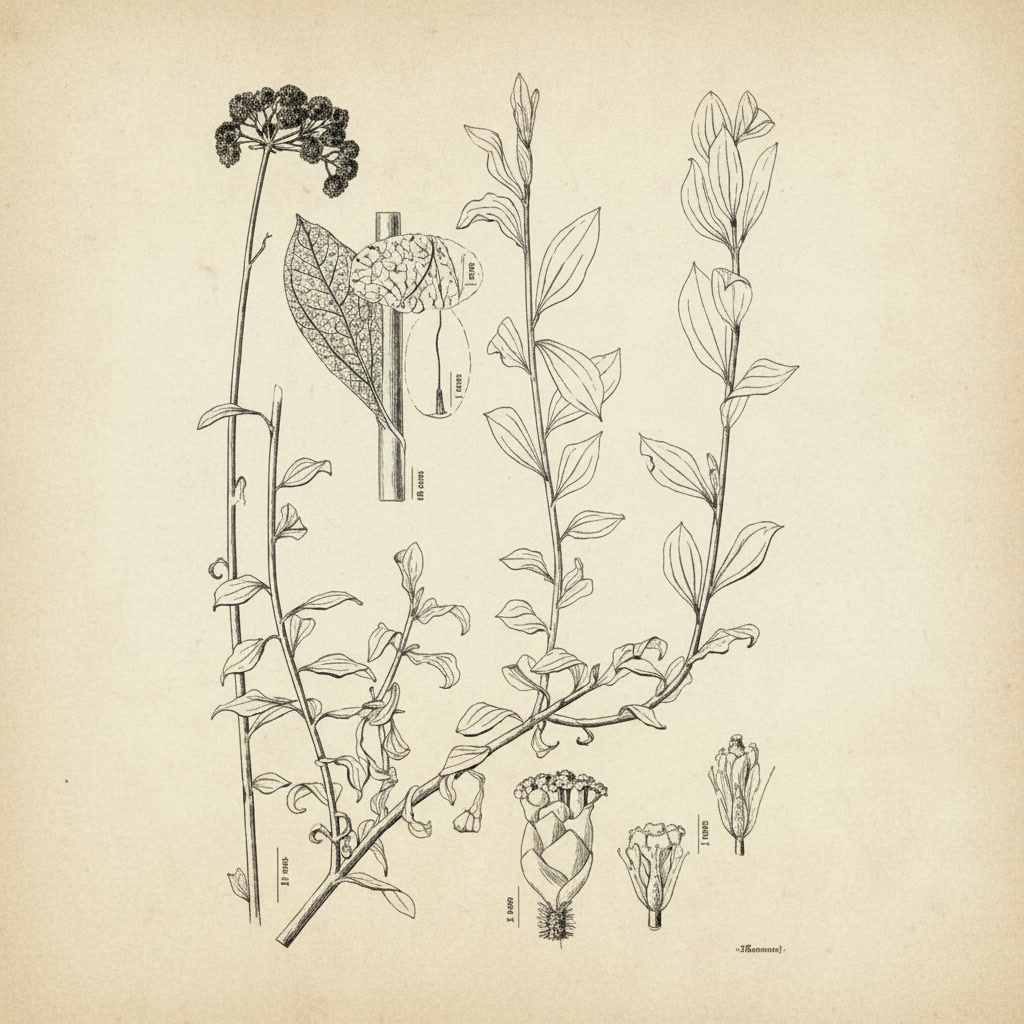
Helichrysum odoratissimum, known as Mphepho in Zulu and Sotho, Kooigoed in Afrikaans, or Imphepho across Nguni languages, is one of the most spiritually and medicinally significant plants in South Africa. A small aromatic shrub with silver-grey woolly leaves and clusters of small yellow everlasting flowers, it grows across the grasslands and mountain slopes of eastern South Africa and is one of the most widely used plants in traditional healing practice. Mphepho is burned as incense to call on ancestral spirits, to cleanse spaces of negative energy, and to open communication between the living and the dead — a practice central to Zulu, Xhosa, Sotho, and Swazi spiritual life. Beyond its ritual significance, the plant has a well-documented pharmacological profile with antimicrobial, anti-inflammatory, and wound-healing properties. It is one of the highest-volume plants traded in South African muthi markets and is used by both traditional healers and ordinary households. Despite this, it remains largely unknown outside southern Africa and represents a significant underdeveloped commercial opportunity in the global wellness and aromatherapy markets.

Active Compounds
  • Italidiones (diketones — primary aromatic compounds)
  • Neryl acetate
  • Alpha-pinene and beta-pinene
  • Geraniol
  • Flavonoids (naringenin, luteolin)
  • Phloroglucinol derivatives
Traditional Uses
  • Burned as incense in ancestral ceremonies and spiritual healing rituals
  • Smoke inhaled for headaches, anxiety, and nervous complaints
  • Leaf infusion taken for coughs, colds, and chest infections
  • Applied topically as a poultice for wounds, sores, and skin infections
  • Used as a sedative and sleep aid
  • Taken internally for liver complaints and digestive disorders
  • Placed under pillows or in sleeping areas to promote restful sleep and dreams
Clinically Validated
  • Antimicrobial activity against Staphylococcus aureus, E. coli, and Candida confirmed in multiple studies (Cock, 2011)
  • Anti-inflammatory activity of phloroglucinol derivatives documented in vitro
  • Antioxidant capacity confirmed by DPPH assay — significant free radical scavenging activity
  • Wound healing properties of leaf preparations demonstrated in excision wound model (Mukherjee et al., 2012)
  • Anxiolytic potential of essential oil inhalation suggested in preliminary animal studies
Cultivation

Highveld grassland and escarpment. Tolerates frost and moderate drought. Prefers well-drained soils in full sun. Rainfall 500–1000mm per annum.

Eastern Cape highlands, KwaZulu-Natal Drakensberg, Mpumalanga escarpment, Lesotho — cultivated in gardens across all eastern provinces

Commercial & Trade Notes

Predominantly wild-harvested for muthi markets and traditional use. Small volumes of essential oil are produced for the aromatherapy market. Large-scale commercial cultivation has not been established. Easy to grow from seed or cuttings — cultivation scale-up is straightforward.

Indigenous Knowledge

Mphepho occupies a unique position in South African spiritual life that transcends its medicinal properties. For Zulu, Xhosa, Sotho, Swazi, and Ndebele peoples, burning Mphepho is the primary means of communicating with amadlozi — the ancestral spirits. No significant healing ceremony, initiation, divination session, or spiritual consultation takes place without it. Izangoma (diviners) burn it at the start of every session to open the spiritual channel. It is burned at weddings, funerals, and coming-of-age ceremonies. In Zulu tradition, the smoke is directed over the body as a spiritual cleansing. In Sotho practice, Mphepho is burned in the home when illness strikes to invite ancestral protection. Its use is so deeply embedded in southern African spiritual culture that it functions less as a medicinal plant and more as a sacred technology — a means of bridging the physical and spiritual worlds. The commercialisation of Mphepho as a wellness or aromatherapy product is viewed with ambivalence by some traditional communities, who regard its sacred functions as inseparable from its identity.

Health & Wellness
Articles for Mphepho are being curated.
Subscribe to be notified when this section launches.
Innovation & R&D · Free
"Helichrysum essential oil — produced from related European species — is one of the most expensive and sought-after oils in luxury aromatherapy. South African Mphepho oil offers a distinctive alternative profile that several niche perfumers and aromatherapists are beginning to explore. Research into italidione compounds for wound healing applications is ongoing at the University of KwaZulu-Natal."
Intelligence summary for Mphepho.
Helichrysum odoratissimum, known as Mphepho in Zulu and Sotho, Kooigoed in Afrikaans, or Imphepho across Nguni languages, is one of the most spiritually and medicinally significant plants in South Africa. A small aromatic shrub with silver-grey woolly leaves and clusters of small yellow everlasting flowers, it grows across the grasslands and mountain slopes of eastern South Africa and is one of the most widely used plants in traditional healing practice. Mphepho is burned as incense to call on ancestral spirits, to cleanse spaces of negative energy, and to open communication between the living and the dead — a practice central to Zulu, Xhosa, Sotho, and Swazi spiritual life. Beyond its ritual significance, the plant has a well-documented pharmacological profile with antimicrobial, anti-inflammatory, and wound-healing properties. It is one of the highest-volume plants traded in South African muthi markets and is used by both traditional healers and ordinary households. Despite this, it remains largely unknown outside southern Africa and represents a significant underdeveloped commercial opportunity in the global wellness and aromatherapy markets.
Link sent →
Innovation & R&D · Free
Intelligence bulletin — Mphepho
SABM Registry analysis.
South Africa's sacred smoke plant — a silver-leaved everlasting whose dried stems have been burned in ancestral rituals, healing ceremonies, and spiritual practices across Nguni and Sotho cultures for thousands of years.
Link sent →
IK & Heritage
Articles for Mphepho are being curated.
Subscribe to be notified when this section launches.
Culture
Articles for Mphepho are being curated.
Subscribe to be notified when this section launches.
Agronomy · Free
"Abundant in eastern South African grasslands. Propagates easily from seed. Fast-growing — harvestable within 8 months of planting. Suitable for smallholder and community cultivation. Dried aerial parts maintain aromatic potency for 18–24 months."
Intelligence summary for Mphepho.
Helichrysum odoratissimum, known as Mphepho in Zulu and Sotho, Kooigoed in Afrikaans, or Imphepho across Nguni languages, is one of the most spiritually and medicinally significant plants in South Africa. A small aromatic shrub with silver-grey woolly leaves and clusters of small yellow everlasting flowers, it grows across the grasslands and mountain slopes of eastern South Africa and is one of the most widely used plants in traditional healing practice. Mphepho is burned as incense to call on ancestral spirits, to cleanse spaces of negative energy, and to open communication between the living and the dead — a practice central to Zulu, Xhosa, Sotho, and Swazi spiritual life. Beyond its ritual significance, the plant has a well-documented pharmacological profile with antimicrobial, anti-inflammatory, and wound-healing properties. It is one of the highest-volume plants traded in South African muthi markets and is used by both traditional healers and ordinary households. Despite this, it remains largely unknown outside southern Africa and represents a significant underdeveloped commercial opportunity in the global wellness and aromatherapy markets.
Link sent →
Agronomy · Free
Intelligence bulletin — Mphepho
SABM Registry analysis.
South Africa's sacred smoke plant — a silver-leaved everlasting whose dried stems have been burned in ancestral rituals, healing ceremonies, and spiritual practices across Nguni and Sotho cultures for thousands of years.
Link sent →
Legislation
Articles for Mphepho are being curated.
Subscribe to be notified when this section launches.
Projects
Articles for Mphepho are being curated.
Subscribe to be notified when this section launches.
Intelligence Pulse
Articles for Mphepho are being curated.
Subscribe to be notified when this section launches.