Pelargonium Sidoides
Pelargonium sidoides
Production
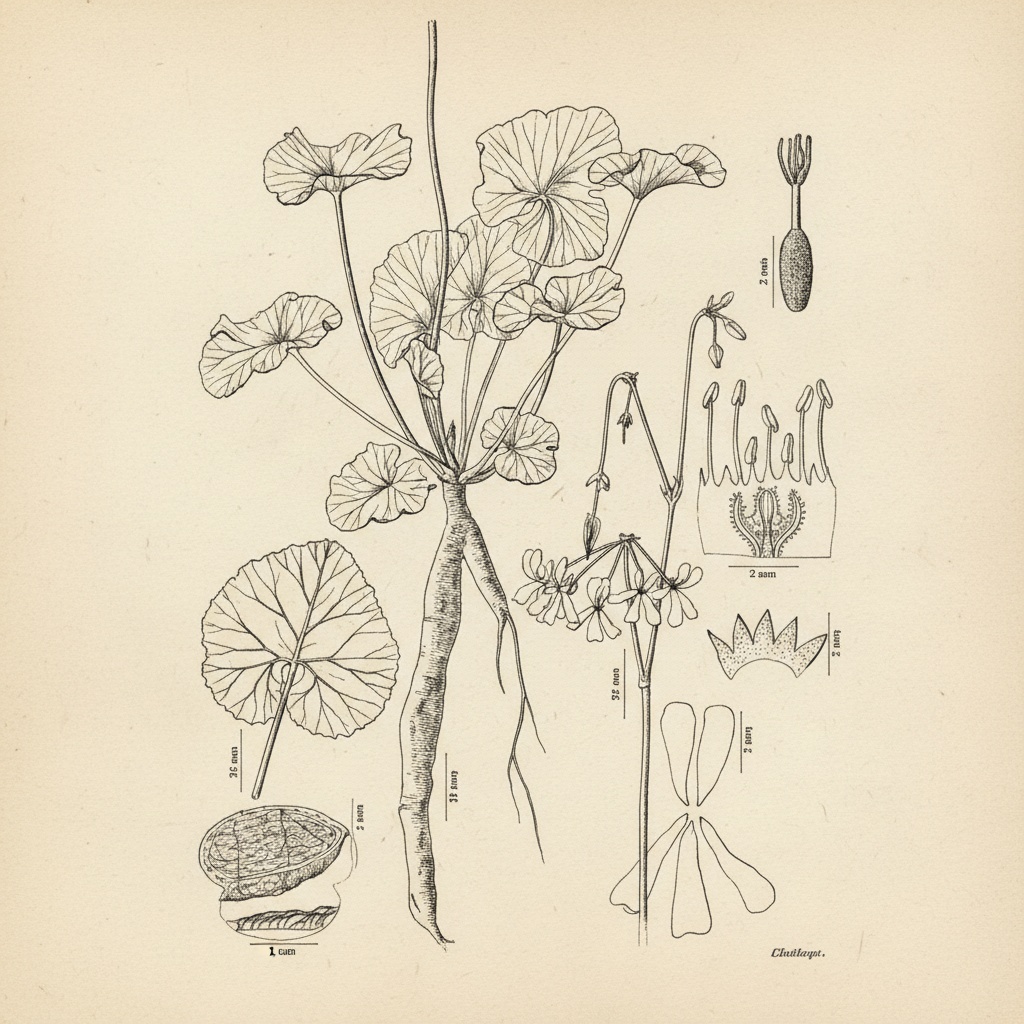
Pelargonium sidoides, known as Umckaloabo in Zulu or South African Geranium, is one of the most commercially successful and clinically validated medicinal plants in South Africa. A small perennial geranium with distinctive dark maroon to almost black flowers and heart-shaped velvety leaves, it grows in the grasslands and rocky slopes of the eastern escarpment. Its dark tuberous roots have been used by Zulu and Xhosa communities for centuries to treat respiratory infections, tuberculosis, and gastrointestinal complaints. The plant entered Western medicine through a remarkable story — British traveller Charles Henry Stevens travelled to South Africa in the 1890s seeking a cure for his tuberculosis, was treated by a Basotho healer using Pelargonium root, recovered, and brought the remedy back to Europe where it was sold as Stevens' Consumption Cure. Modern clinical research has validated its efficacy for acute bronchitis and upper respiratory infections, and the standardised root extract sold under the brand name Umckaloabo is one of the best-selling herbal medicines in Germany, with annual sales exceeding EUR 100 million. It is one of the most striking examples of South African indigenous knowledge generating a globally successful pharmaceutical product.
- Umckalin (coumarin — primary bioactive)
- Scopoletin and scoparone (coumarins)
- Pelargonidin (anthocyanidin)
- Proanthocyanidins
- Polyphenols and tannins
- Flavonoids (catechin, quercetin)
- Root decoction taken for respiratory infections, coughs, and bronchitis
- Used as a treatment for tuberculosis in Zulu and Xhosa tradition
- Taken for diarrhoea, dysentery, and gastrointestinal infections
- Used for liver complaints and as a general immune tonic
- Applied topically for wounds and skin infections
- Root preparations used for sexually transmitted infections
- Efficacy for acute bronchitis confirmed in multiple randomised controlled trials (Matthys et al., 2003)
- Significant reduction in duration and severity of acute bronchitis symptoms versus placebo (Agbabiaka et al., 2008)
- Antiviral activity against influenza A and B, RSV, and parainfluenza viruses demonstrated in vitro
- Immunomodulatory effects — stimulation of innate immunity and interferon production confirmed
- Approved as a traditional herbal medicine for upper respiratory tract infections by the European Medicines Agency
- Cochrane systematic review concluded evidence supports use for acute respiratory infections (2008)
Highland grassland and escarpment. Tolerates moderate frost. Requires well-drained soils. Full sun to light shade. Rainfall 500–900mm per annum.
Eastern Cape highlands, KwaZulu-Natal Drakensberg, Lesotho — primary commercial cultivation in the Eastern Cape
Commercial cultivation is well established in the Eastern Cape supplying the European extract market. The primary buyer is Dr. Willmar Schwabe GmbH, the German herbal pharmaceutical company that produces Umckaloabo. Wild harvesting has caused significant population depletion in some areas and is now supplemented by certified cultivation. Benefit-sharing arrangements with South African communities are required under the Biodiversity Act.
Pelargonium sidoides carries one of the most directly traceable indigenous knowledge-to-global-medicine pathways in South African botanical history. Zulu healers known as izinyanga used the root decoction for chest complaints, calling the plant Umckaloabo — a name that roughly translates as heavy cough or chest problems. Xhosa healers used similar preparations for respiratory and gastrointestinal infections. The plant was central to the treatment of tuberculosis — a disease that ravaged South African communities in the pre-antibiotic era — and its use for this purpose was so widespread that it was one of the first South African plants to attract serious Western medical investigation. The story of Charles Henry Stevens, who was allegedly cured of tuberculosis by a Basotho healer and brought the remedy to Europe, is one of the most widely told narratives in South African ethnobotany. The benefit-sharing debate around Pelargonium sidoides is ongoing — the communities whose traditional knowledge underpins a EUR 100 million annual product receive a fraction of the commercial value generated, and advocacy for more equitable arrangements continues.