South African Botanical Registry

Rooibos

Aspalathus linearis
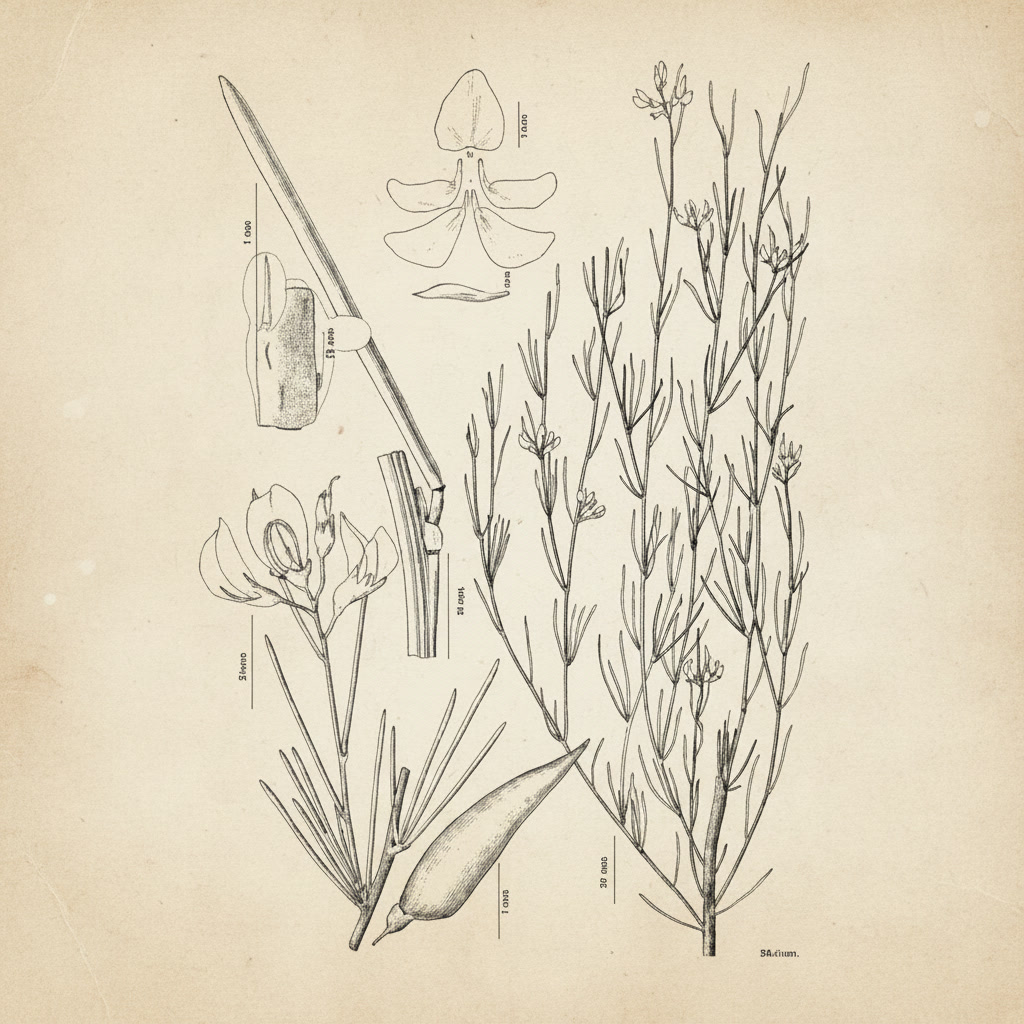
← back Explore
Photo Credit
John van der Berg · Cederberg Nature Reserve · March 2024
Common Names
Afrikaans
Rooibos · Rooibostee
English
Rooibos · Red Bush
Khoikhoi
rooibos (Khoikhoi origin)
Ndebele
irooibos (adopted)
San
not documented
Sepedi
not documented
Sesotho
not documented
Setswana
not documented
Swati
not documented
Tsonga
not documented
Venda
not documented
Xhosa
irooibos (adopted)
Zulu
irooibos (adopted)
Common Name
Rooibos
Scientific Name
Aspalathus linearis
Family
Fabaceae
Native Region
Endemic to the Cederberg mountain range and surrounding areas of the Western Cape — growing exclusively in a 200km radius of the Cederberg at altitudes of 450–1500m in the fynbos biome
Annual
Production
~15,000 t
Export Revenue
R820m
Export Markets
60+ countries
Livelihoods
5,000+
Protection & Benefit Sharing
GI 2021 EU Geographical Indication — South Africa sole legally recognised producer. Name protected in European markets. SA Rooibos Council governs GI compliance.
BSA 2019 Khoisan Benefit-Sharing Agreement — ongoing royalties paid to traditional knowledge holders from industry revenues. Globally cited as the model for ethical botanical trade.
Organic 35% of total production certified organic — highest proportion of any South African botanical export crop. Organic commands significant price premium.
Wild Harvest Fully cultivated — no wild harvest. Commercial production entirely from planted farms in the Cederberg GI zone.
Provinces
ECEastern Cape
FSFree State
GTGauteng
KZNKwaZulu-Natal
LIMLimpopo
MPMpumalanga
NCNorthern Cape
NWNorth West
WCWestern Cape
Key
Registered farm
Certified organic
Introduction

Aspalathus linearis, known universally as Rooibos or Red Bush, is South Africa's most famous botanical export. Endemic to a small area of the Western Cape's Cederberg mountains, it grows nowhere else on earth. Rooibos is the only known natural source of Aspalathin — a potent antioxidant with documented anti-diabetic, cardioprotective, and anti-inflammatory properties. South Africa produces approximately 15,000 tonnes annually, exports to over 60 countries, and generates approximately R800 million in export revenue. In 2021 Rooibos achieved Geographical Indication status under the EU-South Africa Economic Partnership Agreement.

Active Compounds
  • Aspalathin (unique to Rooibos)
  • Nothofagin (dihydrochalcone)
  • Orientin and isoorientin (flavones)
  • Luteolin and quercetin
  • Rutin
  • Chrysoeriol
Traditional Uses
  • General wellness tonic and daily beverage
  • Infant colic and digestive complaints
  • Allergies, hay fever, and skin conditions
  • Nervous tension and insomnia
  • Topical skin wash for acne and sunburn
Clinically Validated
  • Anti-diabetic activity confirmed — inhibits alpha-glucosidase (Muller et al., 2012)
  • Cardioprotective effects confirmed in multiple studies
  • ACE inhibitory activity — relevant to blood pressure management
  • Anti-inflammatory effects via COX-2 reduction documented
  • Safe for all ages — no known drug interactions
Cultivation

Mediterranean fynbos. Well-drained acidic sandy soils. Frost-tolerant. Cannot be grown outside the Cederberg region at commercial scale.

Cederberg, Citrusdal, Nieuwoudtville and surrounding areas of the Western Cape

Commercial & Trade Notes

15,000 tonnes produced annually. 5,000+ jobs in the Cederberg. Major markets — Germany, Netherlands, Japan, UK, USA.

Indigenous Knowledge

The Khoisan people of the Cederberg were the first to harvest and brew Rooibos, a practice stretching back centuries before European settlement. They used stone tools to cut the leaves and fermented them in piles — the same basic processing method used commercially today. In 2019 a landmark benefit-sharing agreement was signed between the South African Rooibos Council and Khoisan communities, providing ongoing royalty payments — the first of its kind for a commercially traded plant in South Africa.

Health & Wellness
Articles for Rooibos are being curated.
Subscribe to be notified when this section launches.
Innovation & R&D · Free
"Aspalathin isolation for pharmaceutical anti-diabetic applications is an active research priority at Stellenbosch University. Green Rooibos — unfermented, higher Aspalathin content — is growing rapidly as a premium product."
Intelligence summary for Rooibos.
Aspalathus linearis, known universally as Rooibos or Red Bush, is South Africa's most famous botanical export. Endemic to a small area of the Western Cape's Cederberg mountains, it grows nowhere else on earth. Rooibos is the only known natural source of Aspalathin — a potent antioxidant with documented anti-diabetic, cardioprotective, and anti-inflammatory properties. South Africa produces approximately 15,000 tonnes annually, exports to over 60 countries, and generates approximately R800 million in export revenue. In 2021 Rooibos achieved Geographical Indication status under the EU-South Africa Economic Partnership Agreement.
Link sent →
Innovation & R&D · Free
Intelligence bulletin — Rooibos
SABM Registry analysis.
The world-famous Red Bush of the Cederberg — a caffeine-free superfood and the only known natural source of the potent antioxidant Aspalathin, protected by Geographical Indication status and exported to over 60 countries.
Link sent →
IK & Heritage · Free
"The word Rooibos is Afrikaans — literally red bush — but the plant's naming history stretches back centuries before Dutch settlers arrived. The Khoikhoi harvested and brewed Rooibos long before it had a European name, but their specific name was not recorded before colonial destruction of those oral traditions. The name Rooibos then did something unusual — it survived globally unchanged, becoming one of the few Afrikaans words recognised in over 60 countries. The scientific name Aspalathus linearis was given by Carl Thunberg in 1772 with the assistance of Khoikhoi guides whose contribution went unacknowledged for over two centuries."
Intelligence summary for Rooibos.
Aspalathus linearis, known universally as Rooibos or Red Bush, is South Africa's most famous botanical export. Endemic to a small area of the Western Cape's Cederberg mountains, it grows nowhere else on earth. Rooibos is the only known natural source of Aspalathin — a potent antioxidant with documented anti-diabetic, cardioprotective, and anti-inflammatory properties. South Africa produces approximately 15,000 tonnes annually, exports to over 60 countries, and generates approximately R800 million in export revenue. In 2021 Rooibos achieved Geographical Indication status under the EU-South Africa Economic Partnership Agreement.
Link sent →
IK & Heritage · Free
Intelligence bulletin — Rooibos
SABM Registry analysis.
The world-famous Red Bush of the Cederberg — a caffeine-free superfood and the only known natural source of the potent antioxidant Aspalathin, protected by Geographical Indication status and exported to over 60 countries.
Link sent →
Culture
Articles for Rooibos are being curated.
Subscribe to be notified when this section launches.
Agronomy · Free
"2025 Cederberg harvest tracking well. Climate change poses long-term threat to the narrow geographic range. Organic certified area has grown to 35% of total production."
Intelligence summary for Rooibos.
Aspalathus linearis, known universally as Rooibos or Red Bush, is South Africa's most famous botanical export. Endemic to a small area of the Western Cape's Cederberg mountains, it grows nowhere else on earth. Rooibos is the only known natural source of Aspalathin — a potent antioxidant with documented anti-diabetic, cardioprotective, and anti-inflammatory properties. South Africa produces approximately 15,000 tonnes annually, exports to over 60 countries, and generates approximately R800 million in export revenue. In 2021 Rooibos achieved Geographical Indication status under the EU-South Africa Economic Partnership Agreement.
Link sent →
Agronomy · Free
Intelligence bulletin — Rooibos
SABM Registry analysis.
The world-famous Red Bush of the Cederberg — a caffeine-free superfood and the only known natural source of the potent antioxidant Aspalathin, protected by Geographical Indication status and exported to over 60 countries.
Link sent →
Legislation
Articles for Rooibos are being curated.
Subscribe to be notified when this section launches.
Projects
Articles for Rooibos are being curated.
Subscribe to be notified when this section launches.
Intelligence Pulse
Articles for Rooibos are being curated.
Subscribe to be notified when this section launches.