Sutherlandia
Lessertia frutescens
Production
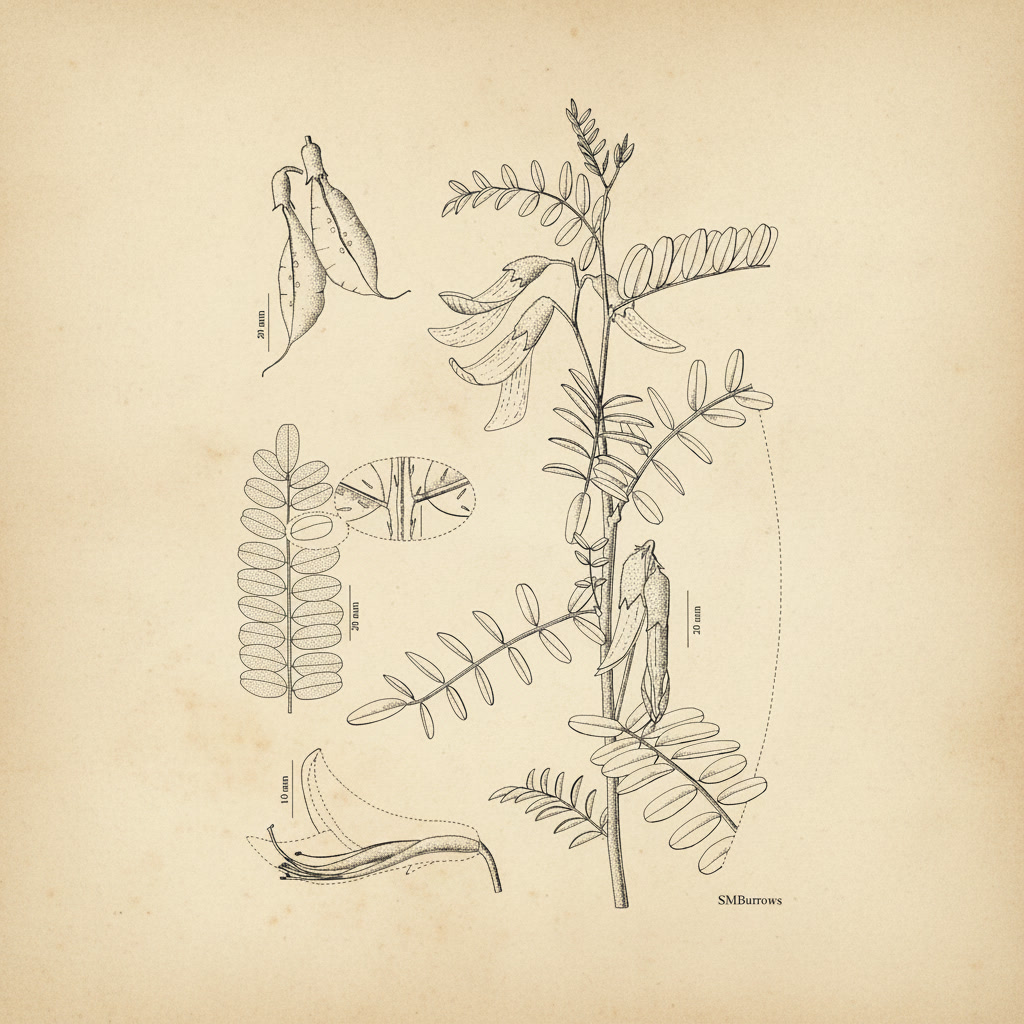
Lessertia frutescens, formerly known as Sutherlandia frutescens and commonly called Cancer Bush, Kankerbos, or Unwele in Xhosa, is one of the most widely used and culturally significant medicinal plants in South Africa. A medium shrub with striking scarlet pea-like flowers and distinctive inflated bladder-like seed pods, it grows across the arid and semi-arid zones of the Cape and Karoo. Its bitter leaves have been used by Khoisan, Xhosa, Zulu, Cape Malay, and Afrikaner communities for centuries as a tonic for serious illness — historically cancer, tuberculosis, and wasting diseases, and more recently HIV/AIDS. The plant contains an exceptional combination of bioactive compounds including L-canavanine, GABA, pinitol, and a range of flavonoids that together produce documented anti-tumour, immunomodulatory, anti-inflammatory, and adaptogenic effects. Sutherlandia attracted significant international research attention in the early 2000s when it was investigated as a supportive treatment for HIV/AIDS patients, and while concerns about drug interactions with antiretrovirals were raised, subsequent research has refined understanding of appropriate use. It remains one of the most pharmacologically complex and research-active plants in the SABM registry and is widely regarded by South African herbalists as the most powerful general tonic in the indigenous pharmacopoeia.
- L-canavanine (non-protein amino acid — anti-tumour and antiviral)
- GABA (gamma-aminobutyric acid — anxiolytic and neuroprotective)
- Pinitol (D-pinitol — insulin sensitising and anti-inflammatory)
- Sutherlandins A-D (flavonoids)
- Cycloartane triterpenoids
- Asparagine
- Leaf decoction taken as a general tonic for cancer and serious illness
- Used for HIV/AIDS as an immune support and wasting treatment
- Taken for tuberculosis and chronic respiratory infections
- Used for stress, anxiety, and nervous exhaustion
- Taken for diabetes and blood sugar management
- Used for stomach complaints, peptic ulcers, and liver conditions
- Applied topically as a wash for wounds, rashes, and skin infections
- L-canavanine demonstrated anti-tumour activity against multiple cancer cell lines in vitro
- GABA confirmed as centrally active anxiolytic compound — supports traditional use for stress
- Pinitol shown to improve insulin sensitivity in animal models of type 2 diabetes
- Immunomodulatory effects confirmed in human peripheral blood mononuclear cell studies
- Significant interaction with CYP3A4 enzyme pathway — affects metabolism of many pharmaceutical drugs including antiretrovirals (Mills et al., 2005)
- Phase I human safety trial completed — well tolerated at standard doses (Johnson et al., 2007)
Arid to semi-arid Mediterranean and Karoo. Extremely drought-tolerant. Full sun. Well-drained sandy or rocky soils. Tolerates light frost. Rainfall 150–500mm per annum.
Western Cape, Northern Cape, Eastern Cape — particularly the Karoo, Namaqualand, and fynbos margins. Cultivated in gardens across South Africa.
Both wild-harvested and cultivated for the herbal medicine market. Widely sold in health shops, pharmacies, and muthi markets across South Africa. Small-scale export to European and North American herbal medicine markets. Easy to cultivate — propagates readily from seed.
Sutherlandia frutescens is one of the most cross-cultural plants in South African ethnobotany. Every major cultural group in the Cape and Karoo has used it for serious illness. The Khoikhoi used it as a tonic for wasting and fever. Xhosa healers prescribed Unwele for cancer and tuberculosis. Cape Malay apothecaries incorporated it into compound preparations for chronic disease. Afrikaner communities knew it as Kankerbos — Cancer Bush — and it appeared in Cape domestic medicine as a treatment for internal tumours. In Zulu tradition it is used for HIV and wasting diseases. This breadth of use across cultures and conditions reflects the plant's genuinely broad pharmacological activity rather than a single specific application. The plant's reputation for treating cancer — which attracted scepticism from Western medicine — has been partially vindicated by modern research confirming L-canavanine's anti-tumour activity. South African herbalists regard Sutherlandia as the most important tonic plant in the indigenous pharmacopoeia — a role it has played continuously for centuries across the full diversity of South African cultural life.