Uzara
Xysmalobium undulatum
Production
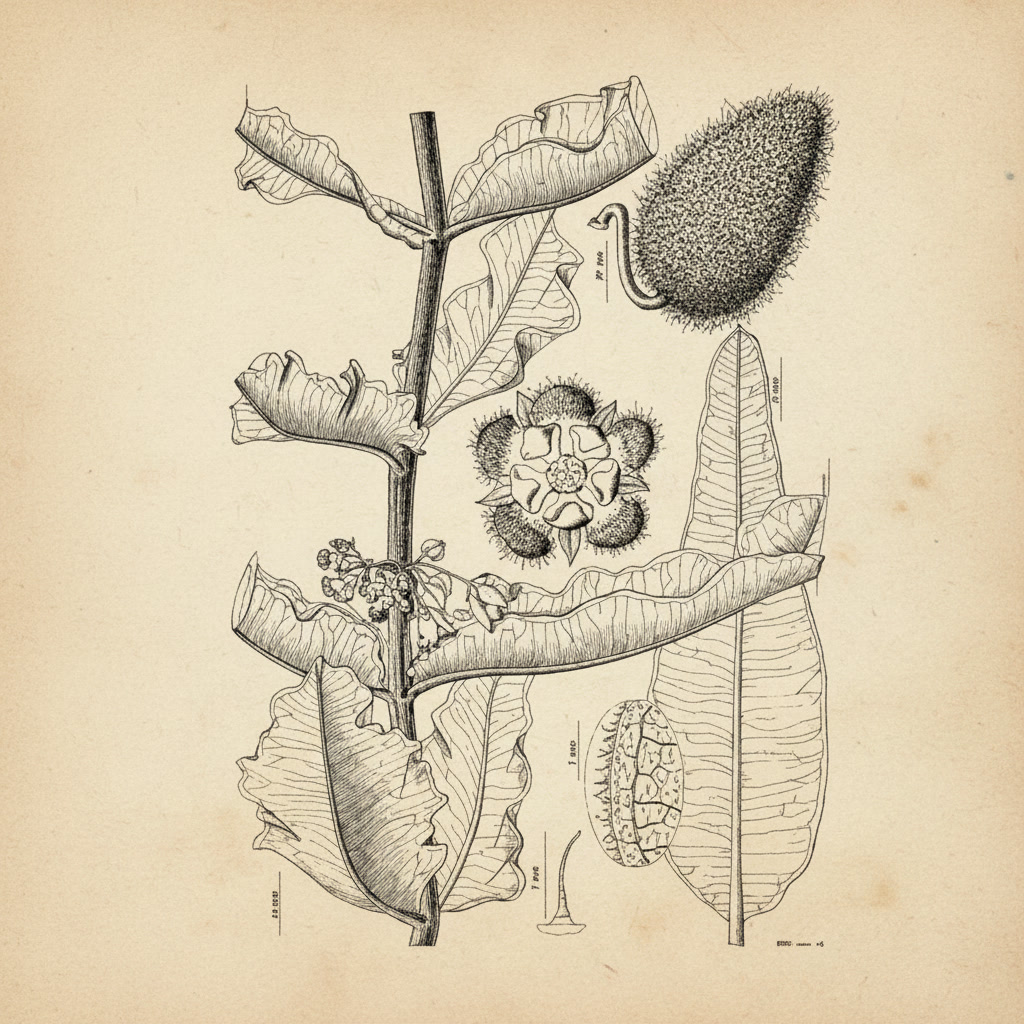
Xysmalobium undulatum, known as Uzara in Zulu or Bitterwortel in Afrikaans, is one of the most historically significant medicinal plants in South Africa's formal pharmaceutical history. A robust perennial growing from a large tuberous root in the moist grasslands of eastern South Africa, it produces clusters of small cream to greenish flowers and distinctive large seed pods. The root has been used by Zulu communities for centuries as a primary treatment for diarrhoea, dysentery, and gastrointestinal complaints — conditions that were major causes of infant and adult mortality across southern Africa before modern medicine. Uzara entered Western pharmaceutical use through German colonial medicine in the late 19th century and was formally registered as a pharmaceutical product in Germany in the early 20th century — making it one of the first African medicinal plants to achieve formal pharmaceutical registration in Europe. The standardised root extract is still sold in German pharmacies today under the brand name Uzara, prescribed for non-specific acute diarrhoea. Its primary bioactives — uzarigenin glycosides — have a mechanism of action similar to cardiac glycosides, reducing intestinal motility and fluid secretion. This pharmacological specificity makes Uzara one of the most clearly mechanism-validated plants in the SABM registry.
- Uzarigenin (primary cardenolide glycoside — reduces intestinal motility)
- Xysmalorin
- Uzarin (uzarigenin glycoside)
- Cymarose glycosides
- Tannins
- Root decoction taken for acute diarrhoea and dysentery
- Used for infant diarrhoea — one of the primary traditional treatments for this life-threatening condition
- Taken for stomach cramps and gastrointestinal spasms
- Used for nausea and vomiting
- Applied for menstrual irregularities and uterine complaints
- Taken as a general digestive tonic
- Uzarigenin glycosides confirmed to reduce intestinal motility via Na+/K+-ATPase inhibition — validated antidiarrhoeal mechanism (Bodinet et al., 2002)
- Clinical efficacy for acute non-specific diarrhoea confirmed in German pharmaceutical registration studies
- Significant interaction with cardiac glycosides (digoxin) documented — contraindicated in patients on cardiac medication
- Antispasmodic activity on intestinal smooth muscle confirmed in vitro
- Registered as a traditional herbal medicine for diarrhoea by the German Commission E
Moist highland grassland. Tolerates frost. Requires well-drained but moisture-retentive soils. Partial shade to full sun. Rainfall 700–1200mm per annum.
KwaZulu-Natal midlands and Drakensberg, Eastern Cape highlands, Mpumalanga escarpment, Lesotho
Predominantly wild-harvested for the European pharmaceutical market and local muthi trade. Commercial cultivation has not been established at scale. The German pharmaceutical market is the primary commercial driver — Uzara extract is imported from South Africa for the registered product. Overharvesting of accessible wild populations is a growing concern.
Xysmalobium undulatum occupies a specific and trusted place in Zulu traditional medicine as the primary treatment for diarrhoea — a condition that historically claimed the lives of many infants and elderly people in rural communities. Zulu izinyanga prepared the root by drying, grinding, and decocting it in water, administering the bitter liquid in carefully measured doses. The dosing knowledge was important — Uzara's cardiac glycoside content means that excessive doses are dangerous, and traditional healers understood and respected this boundary through generations of accumulated knowledge. Xhosa healers used similar preparations for gastrointestinal complaints. The Afrikaans name Bitterwortel — Bitter Root — reflects both the taste and the medicinal seriousness with which it was regarded by Cape communities. The transition of Uzara from Zulu traditional medicine to registered European pharmaceutical is one of the clearest examples of African ethnobotanical knowledge being directly validated and commercialised by Western medicine — though as with many such transitions, the benefit-sharing pathway back to source communities has been limited.