South African Botanical Registry

Wild Sage

Salvia africana-lutea
← back Explore
Photo Credit
John van der Berg · Cederberg Nature Reserve · March 2024
Common Names
Afrikaans
Geelslangbos · Bruinsalie
English
Wild Sage · Brown Sage
Khoikhoi
wilde salie (partially preserved)
Ndebele
not documented
San
not documented
Sepedi
not documented
Sesotho
not documented
Setswana
not documented
Swati
not documented
Tsonga
not documented
Venda
not documented
Xhosa
not documented
Zulu
not documented
Common Name
Wild Sage
Scientific Name
Salvia africana-lutea
Family
Lamiaceae
Native Region
Western Cape coast and coastal mountains — endemic to South Africa, growing in coastal fynbos, dune scrub, and rocky slopes from Namaqualand to the Garden Route at altitudes of 0–600m
Annual
Production
10–50 t
Export Revenue
R5–15m
Export Markets
EU, UK, USA
Livelihoods
100–300
Protection & Benefit Sharing
No GI No GI protection. Cape Malay culinary tradition is primary commercial driver. Undercommercialised relative to profile.
No BSA No formal agreement. Khoikhoi knowledge partially preserved in Cape Malay cooking tradition — communities not formally recognised.
Organic Small certified organic production from Western Cape coastal fynbos.
Wild Harvest Primarily wild-harvested. No sustainability concerns at current scale.
Provinces
ECEastern Cape
FSFree State
GTGauteng
KZNKwaZulu-Natal
LIMLimpopo
MPMpumalanga
NCNorthern Cape
NWNorth West
WCWestern Cape
Key
Registered farm
Certified organic
Introduction

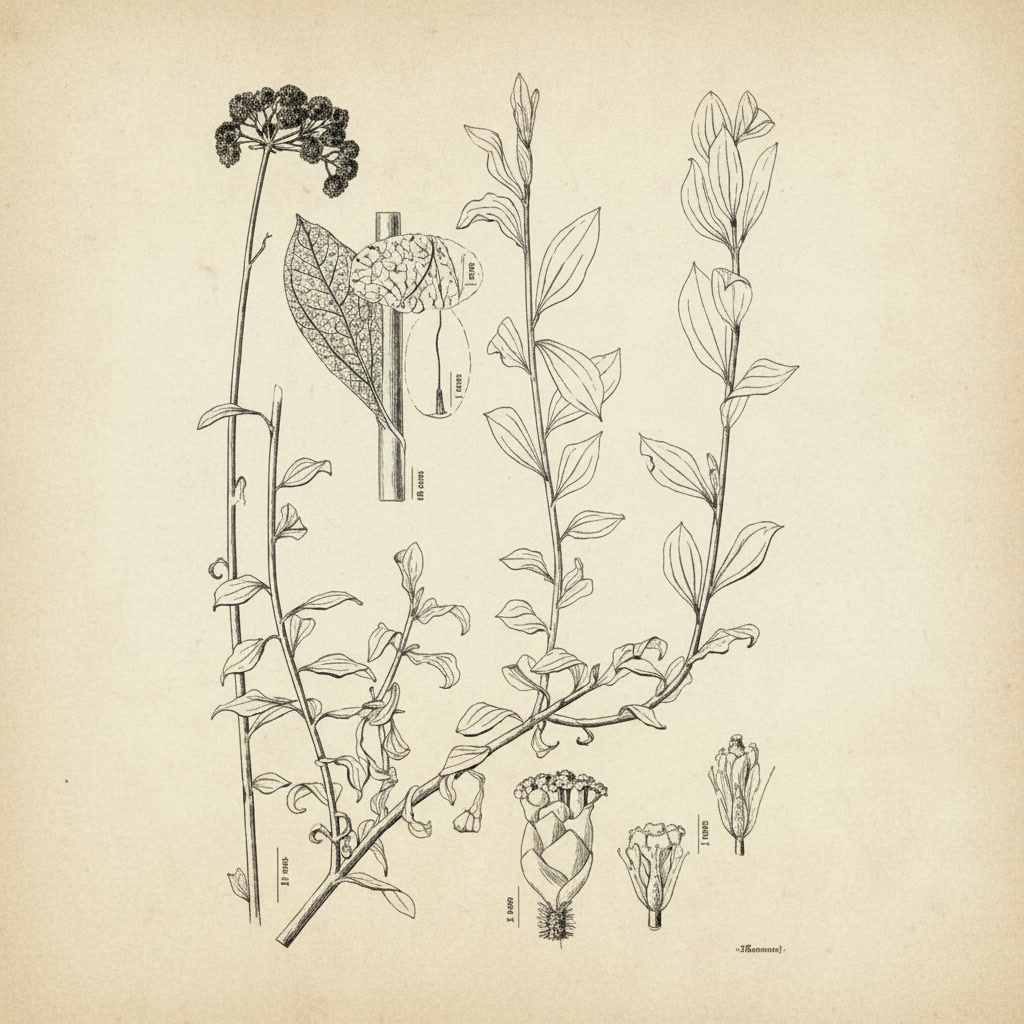
Salvia africana-lutea, known as Wild Sage, Brown Sage, or Geelslangbos in Afrikaans, is one of the most distinctive and aromatic plants of the Western Cape coast. A robust shrub growing up to two metres tall with grey-green aromatic leaves and striking rust-brown to golden-yellow two-lipped flowers, it is a characteristic plant of coastal fynbos and dune scrub from Namaqualand to the Garden Route. The plant belongs to the largest genus of flowering plants in the mint family and is one of approximately 900 Salvia species worldwide — but its phytochemical profile is distinctly South African, combining the classic sage aromatics with fynbos-specific compounds that give it a unique fragrance character. Wild Sage has been used by Khoikhoi, Cape Malay, and Afrikaner communities for centuries as a medicinal and culinary herb, and its leaves are still brewed as a tea and used in Cape Malay cooking today. The essential oil, produced by steam distillation of the leaves, is attracting growing interest from the natural fragrance and aromatherapy industries as a distinctive African-origin sage alternative. South Africa is the only significant global source of this oil, positioning it as a potential high-value botanical export.

Active Compounds
  • 1,8-cineole (eucalyptol — primary aromatic compound)
  • Camphor
  • Alpha-thujone and beta-thujone
  • Borneol and bornyl acetate
  • Ursolic acid (triterpenoid)
  • Flavonoids (luteolin, apigenin, salvigenin)
  • Rosmarinic acid
Traditional Uses
  • Leaf infusion taken for colds, flu, and sore throats
  • Used as a digestive tonic and carminative for bloating and indigestion
  • Steam inhalation of boiled leaves for sinusitis and chest complaints
  • Applied topically for wounds, skin infections, and insect bites
  • Leaves rubbed on the body as an insect repellent
  • Used in Cape Malay cooking as a culinary herb for meat dishes
  • Burned as a room fumigant and air freshener
Clinically Validated
  • Antimicrobial activity against Staphylococcus aureus, E. coli, and Candida confirmed in multiple studies
  • Anti-inflammatory activity of ursolic acid and rosmarinic acid well documented across Salvia genus research
  • Antioxidant capacity confirmed by DPPH assay — comparable to other medicinal Salvia species
  • 1,8-cineole confirmed as an effective expectorant and bronchodilator — supports traditional respiratory use
  • Insect repellent activity of essential oil confirmed against Aedes aegypti mosquitoes in preliminary studies
Cultivation

Mediterranean coastal fynbos. Well-drained sandy soils. Full sun. Drought-tolerant once established. Salt-wind tolerant. Sensitive to waterlogging. Rainfall 250–600mm per annum.

Western Cape coast from Namaqualand to the Garden Route — particularly the West Coast, Cape Peninsula, Overberg, and coastal Langeberg

Commercial & Trade Notes

Predominantly harvested from wild plants for domestic use and small-scale herbal markets. Essential oil production is at cottage industry scale. Large-scale commercial cultivation and essential oil export has not been established but is identified as a near-term opportunity given growing international demand for distinctive African sage oils.

Indigenous Knowledge

Salvia africana-lutea has been woven into Cape domestic life for as long as communities have lived along the Western Cape coast. Khoikhoi people used it medicinally for respiratory complaints and as a body rub. Cape Malay communities integrated it into their cooking and their apothecary traditions — it appears in Cape Malay recipe books and compound herbal remedies dating back to the 18th century. Afrikaner coastal communities used it as a household remedy for colds and chest complaints, brewed as a strong bitter tea. The practice of burning dried Wild Sage bundles to fumigate and freshen living spaces is documented across Cape cultural communities — a parallel tradition to the North American white sage smudging that is now driving global demand for sage-based ritual wellness products. The plant's coastal habitat means it has been a constant presence in the lives of fishing communities along the West Coast, who used it as a ready-to-hand medicine and flavouring. Its integration into Cape Malay cuisine represents one of the most enduring examples of indigenous plant knowledge becoming part of a living culinary tradition.

Health & Wellness
Articles for Wild Sage are being curated.
Subscribe to be notified when this section launches.
Innovation & R&D · Free
"Salvia africana-lutea essential oil is being evaluated by European natural fragrance houses as a distinctive African-origin sage alternative. Its unique combination of classic sage aromatics with fynbos-specific compounds gives it a profile that cannot be replicated by European or North American sage species. Research into ursolic acid extraction for cosmetic anti-ageing applications is ongoing at Stellenbosch University."
Intelligence summary for Wild Sage.
Salvia africana-lutea, known as Wild Sage, Brown Sage, or Geelslangbos in Afrikaans, is one of the most distinctive and aromatic plants of the Western Cape coast. A robust shrub growing up to two metres tall with grey-green aromatic leaves and striking rust-brown to golden-yellow two-lipped flowers, it is a characteristic plant of coastal fynbos and dune scrub from Namaqualand to the Garden Route. The plant belongs to the largest genus of flowering plants in the mint family and is one of approximately 900 Salvia species worldwide — but its phytochemical profile is distinctly South African, combining the classic sage aromatics with fynbos-specific compounds that give it a unique fragrance character. Wild Sage has been used by Khoikhoi, Cape Malay, and Afrikaner communities for centuries as a medicinal and culinary herb, and its leaves are still brewed as a tea and used in Cape Malay cooking today. The essential oil, produced by steam distillation of the leaves, is attracting growing interest from the natural fragrance and aromatherapy industries as a distinctive African-origin sage alternative. South Africa is the only significant global source of this oil, positioning it as a potential high-value botanical export.
Link sent →
Innovation & R&D · Free
Intelligence bulletin — Wild Sage
SABM Registry analysis.
The Cape's golden coastal sage — a robust aromatic shrub with rust-gold flowers whose leaves have been brewed, burned, and applied by Cape communities for centuries, and whose essential oil is now attracting serious attention from the global natural fragrance and wellness industries.
Link sent →
IK & Heritage
Articles for Wild Sage are being curated.
Subscribe to be notified when this section launches.
Culture
Articles for Wild Sage are being curated.
Subscribe to be notified when this section launches.
Agronomy · Free
"Grows readily in coastal and lowland Western Cape conditions. Propagates easily from cuttings. Fast-growing — harvestable within 12 months. Extremely water-wise and salt-tolerant, making it suitable for coastal cultivation areas unsuitable for other crops. Essential oil yield of 0.4–0.8% from fresh leaf material."
Intelligence summary for Wild Sage.
Salvia africana-lutea, known as Wild Sage, Brown Sage, or Geelslangbos in Afrikaans, is one of the most distinctive and aromatic plants of the Western Cape coast. A robust shrub growing up to two metres tall with grey-green aromatic leaves and striking rust-brown to golden-yellow two-lipped flowers, it is a characteristic plant of coastal fynbos and dune scrub from Namaqualand to the Garden Route. The plant belongs to the largest genus of flowering plants in the mint family and is one of approximately 900 Salvia species worldwide — but its phytochemical profile is distinctly South African, combining the classic sage aromatics with fynbos-specific compounds that give it a unique fragrance character. Wild Sage has been used by Khoikhoi, Cape Malay, and Afrikaner communities for centuries as a medicinal and culinary herb, and its leaves are still brewed as a tea and used in Cape Malay cooking today. The essential oil, produced by steam distillation of the leaves, is attracting growing interest from the natural fragrance and aromatherapy industries as a distinctive African-origin sage alternative. South Africa is the only significant global source of this oil, positioning it as a potential high-value botanical export.
Link sent →
Agronomy · Free
Intelligence bulletin — Wild Sage
SABM Registry analysis.
The Cape's golden coastal sage — a robust aromatic shrub with rust-gold flowers whose leaves have been brewed, burned, and applied by Cape communities for centuries, and whose essential oil is now attracting serious attention from the global natural fragrance and wellness industries.
Link sent →
Legislation
Articles for Wild Sage are being curated.
Subscribe to be notified when this section launches.
Projects
Articles for Wild Sage are being curated.
Subscribe to be notified when this section launches.
Intelligence Pulse
Articles for Wild Sage are being curated.
Subscribe to be notified when this section launches.